Monday, February 15, 2021

Mark 7:34 - Ephphatha


There is an odd linguistic moment in today's reading from Gospel Mk 7:31-37 that sticks out like a giant stone in Ohio, displaced by a glacier.

Jesus left the district of Tyre

and went by way of Sidon to the Sea of Galilee,

into the district of the Decapolis.

And people brought to him a deaf man who had a speech impediment

and begged him to lay his hand on him.

He took him off by himself away from the crowd.

He put his finger into the man’s ears

and, spitting, touched his tongue;

then he looked up to heaven and groaned, and said to him,

“Ephphatha!” (that is, “Be opened!”)

And immediately the man’s ears were opened,

his speech impediment was removed,

and he spoke plainly.

He ordered them not to tell anyone.

But the more he ordered them not to,

the more they proclaimed it.

They were exceedingly astonished and they said,

“He has done all things well.

He makes the deaf hear and the mute speak.”

That Aramaic word "Ephphatha" is particularly fascinating to me as it seems so out of place.  It is used only once in the entirety of the Bible, only by Mark.  

Strong's Number G2188 matches the Greek εφφαθα (ephphatha), which occurs 1 times in 1 verses in the Greek concordance of the KJV

Why?  Most commentators I've read suggest either

a. the evangelist was present at the scene and took play by play notes on everything Christ did...
b. the evangelist was emphasizing the original language of Christ in order to give some sort of meaning to his Greek speaking audience

These explanations seem weak to me.  A better explanation might be that the author was including the word in a larger ritual of some sort and/or making a literary reference which we miss.

Why for instance, does the Christ “put his finger into the man’s ears” and why does he spit, touch his (the man’s) tongue, and then look up to heaven?  There is some sort of ceremony going on here to which we are not party.  Here is the Greek:

καὶ ἀναβλέψας εἰς τὸν οὐρανὸν ἐστέναξενκαὶ λέγει αὐτῷ Ἐφφαθά ἐστιν Διανοίχθητι:

Here is Easton's Bible Dictionary

The Greek form of a Syro-Chaldaic or Aramaic word, meaning "Be opened," uttered by Christ when healing the man who was deaf and dumb (Mark 7:34). It is one of the characteristics of Mark that he uses the very Aramaic words which fell from our Lord's lips. (See 3:17; 5:41; 7:11; 14:36; 15:34.)

and

International Standard Bible Encyclopedia

EPHPHATHA

ef'-a-tha, ef-a'-tha (Ephphatha):

Aramaic word used by Christ (Mark 7:34), the 'ethpa`al imperative of Aramaic pethach (Hebrew pathach), translated, "Be (thou) opened"; compare Isaiah 35:5. The Aramaic was the sole popular language of Palestine (Shurer, History of the Jewish People in the Time of Jesus Christ, IIg, 9) and its use shows that we have here the graphic report of an eyewitness, upon whom the dialectic form employed made a deep impression. This and the corresponding act of the touch with the moistened finger is the foundation of a corresponding ceremony in the Roman Catholic formula for baptism.

and this from the Wikipedia entry of "Language of Jesus"

Ephphatha (Ἐφφαθά)

See also: Healing the deaf mute of Decapolis

Mark 7:34

Once again, the Aramaic word is given with the transliteration, only this time, the word to be transliterated is more complicated. In Greek, the Aramaic is written ἐφφαθά. This could be from the Aramaic ethpthaḥ, the passive imperative of the verb pthaḥ, 'to open', since the th could assimilate in western Aramaic. The pharyngeal ḥ was often omitted in Greek transcriptions in the Septuagint (Greek Old Testament) and was also softened in Galilean speech.

Lamar Williamson writes that this is the last unit in a series of miracles concerned with the identity of Jesus, as subsequently confirmed by the Apostle Peter's christological affirmation in Mark 8:29, where Peter exclaimed: "You are the Messiah".

Two good commentaries can be found here

https://catholicexchange.com/key-jesus-ministry-one-word-ephphatha?fbclid=IwAR02Fen8a3V-03cKca6klq2-W8Cv6GTPuBaR9ypzBooYYrhKifY5akrRyGg

and here

http://www.turningtogodsword.com/ephphatha/?fbclid=IwAR1z9GMwTa1zxtH_e9sWtaYnRPwWNW4BKPBQ6Npt9OjzcH-xogXa9V9mzd 

But looking at the text more in detail why does the Christ first “look up”, ἀναβλέψας, which is also to “open his eyes”?

And why “look up to heaven”, τὸν οὐρανὸν?  Is it b/c “God” is in heaven?  The same image appears in the play of Euripides, the Bacchae, when the blinding madness of the queen/mother Agave leaves her and she realizes her crime of prolicide.

Kadmos
Alas, alas! When you realize what you have done you will suffer a terrible pain. But if you remain forever in the state you are in now, though hardly fortunate, you will not imagine that you are unfortunate.

Agave
But what of these matters is not right, or what is painful?

Kadmos
First cast your eye up to this sky.

Agave
All right; why do you tell me to look at it?

Kadmos
Is it still the same, or does it appear to have changed?

Agave
It is brighter than before and more translucent.

Kadmos
Is your soul still quivering?

Agave
I don't understand your words. I have become somehow sobered, changing from my former state of mind.

Was the act of looking at the heavens something of a panacea for the “crime” of madness? 

Ziony Zevit, in his article, "The Common Origin of the Aramaicized Prayer to Horus and of Psalm 20," has suggested that Psalm 20 has a close connection to a prayer to Horus in Egypt.  https://www.jstor.org/stable/604527

https://www.biblegateway.com/passage/?search=Psalm%2020&version=NIV

Perhaps there are similar connections here.

Is ethpthaḥ any relation to the Egyptian “Ptah”? https://en.wikipedia.org/wiki/Ptah#Representations_and_hypostases

Is the “cleansing of the eye” at all related to the Egyptian concept of the Wadjet; the eye of Horus, god of the sky?

Is the “cleansing, or opening of the eye” related to the “opening of the mouth” ceremony from Egypt?

https://en.wikipedia.org/wiki/Opening_of_the_mouth_ceremony

https://egyptcentrecollectionblog.blogspot.com/2020/06/ritual-and-magic-in-ancient-egypt.html 

Parts of this ceremony certainly appear in the Bible; Psalm 51, for instance

O Lord, open thou my lips; and my mouth shall shew forth thy praise.

https://www.biblegateway.com/passage/?search=Psalm+51&version=KJV

and Psalm 119

Open thou mine eyes, that I may behold wondrous things out of thy law.

https://www.biblegateway.com/passage/?search=Psalm+119&version=KJV

Why then does he “sigh”, ἐστέναξεν?  The same image of breath coming forth from the body is the ruah of YHWH working to create the world in Genesis.  God breathed life into the nostrils of man.  Yet this ruah is ascending to heaven almost like a votive smoke of some kind.

Then comes the imperative, Ἐφφαθά, “be opened”.


Thursday, July 2, 2020

Men and Minotaurs


Dr. Jordan Peterson has always been very adamant about the idea that we have to refrain from isolating bad men and evil actions as something other than ourselves; to approach our own self-examination with caution and w/o the tendency to think of our own lives as pillars of virtue or exemplars of civilized men.  "There but for the grace of God" - exactly.  

"Gnothi seauton" as the Greeks quipped; "know yourself".  The task of paradox (as our man, Chesterton wrote) is a difficult one, though, b/c at the same time we have to refrain from such siloed and Pharisaical thinking, don't we also have to be able to recognize evil in the world?  Do we not have to be able to spot monsters as monsters?  For instance, to say that Kermit Gosnell is monstrous recognizes the evil in which he was engaged (in aborting babies) and yet to spot that Gosnell was probably like B.N.Nathanson = a deeply wounded man who suffered as every other human suffered seems to contradict this monstrous quality to his personality.  Norma McCorvey, whose convictions about Jesus and about abortion developed over time, engaged in monstrous actions too - suffered for it - recognized after time how she also had been used and converted.  

Humans are never simple.  "Of all strange things in the world, mankind is the most strange."


I just finished watching "One Child Nation" about the Chinese abortion/forced sterilization program that resulted in murder, violation of basic rights, and human trafficking on a global scale.  Yet everyone interviewed expressed their own helplessness and sorrow at the same time as professing the goodness of the program.  What?  Even at the end of the program the narrator/interviewer/producer equivocated the Chinese program with the US program that prevents women from choosing abortion.  That seemed a very odd conclusion to make, but humans are never simple.  

"What is man that you should care for him?  Mortal man that you should come to him?"


THAT I think is the power of artwork - to make us reflect on ourselves, how we fit into this human thing, and what the scope of strangeness the human thing covers.  

Anagogy.  (ἀναγωγή), a "climb" or "ascent" upwards. 
...facilis descensus Averno;

noctes atque dies patet atri ianua Ditis;
sed revocare gradum superasque evadere ad auras,
hoc opus, hic labor est.  

My father used to say that, of the four levels of meaning in art, anagogy was the real goal; "the goal of all art is anagogy" - prompting us to reflect on our own role in similar situations (and thus the realism in art).  I think both highly symbolic art (such as Beowulf) and highly realistic art (such as Crime & Punishment, or Emma, or Grapes of Wrath) and even hyperbolic art (such as A Good Man is Hard to Find, or The Trial, or even The Jungle or Lord of the Flies) prompt such reflection.

If such prompting, though, is accident and force rather than reflection and choice, we have a problem.  This is the point about "symbolism" I was trying to get at during our discussion.  The action of one man killing another is an action (whether he be a white cop killing a black man, or a black haberdasher killing an oriental deli worker) - it becomes symbolic when it is recorded (in paint, song, artwork or video), edited (so we see only what the editor wants us to see) and repeated (until we utter it as mantra that two legs are bad and four are good).*  

In that case the "mighty upheaval" that breaks the historic tectonic plates apart is more damaging than helpful - more Krakatoa than continental drift.  And though the upheaval may be in response to unloving choices, or to government oppression, or to injustice of some kind, it may also be orchestrated upheaval designed to scour away the old way and usher in the new glorious revolution of next Tuesday; the spark to ignite the preconditioned powder keg.  Who orchestrates, I wonder?  Who prepares the way?  Yuri Bezmenov has some distinct ideas in answer to such questions prompting us to look a bit further than what might have been mere incompetence or racism:

Truth can speak to power and bring about an end to the injustices of the world; a standing up to the tanks, a defiance of the demand to join the Nazi army, or a regret of having only one life to give for your country.  And though sometimes the event that leads to "the mighty upheaval" might result in a better world (though whether a better middle east now exists is another subject of discussion) a Manchurian incident, or a dismissal of Necker, or a shooting of vam Rath might also result in a Rape of Nanking, a Reign of Terror, or a Kristallnacht.  

A multitude primed for inflammation is a dangerous multitude indeed & if we are to ask "who would I be, Chauvin or Floyd?" we must also ask "who would I be, Guan Guangjing or Japanese Imperial army?  Marie Antoinette or Danton? Ruth Winkelmann or Joseph Goebbels?"  It is easy enough to rejoice in Sidney Carton's self sacrifice and claim affinity and nobility of how we would act in a similar situation.  It is far harder to wrestle with the idea that, if we had to choose between betraying our family & convictions and saving our own hide we might prove more like the Minotaur than the Man from Athens.  Perhaps this is why Tiresias says to Oedipus "You.  You are the man.  The source of all pollution."


Lord Jesus, let me know myself and know You,

And desire nothing save only You.
Let me hate myself and love You.
Let me do everything for the sake of You.
Let me humble myself and exalt You.
Let me think of nothing except You.
Let me die to myself and live in You.
Let me accept whatever happens as from You.
Let me banish self and follow You,
And ever desire to follow You.
Let me fly from myself and take refuge in You,
That I may deserve to be defended by You.
Let me fear for myself, let me fear You,
And let me be among those who are chosen by You.
Let me distrust myself and put my trust in You.
Let me be willing to obey for the sake of You.
Let me cling to nothing save only to You,
And let me be poor because of You.
Look upon me, that I may love You.
Call me that I may see You,
And forever enjoy You.

Amen.
St. Augustine of Hippo


*read John Berger and Marshall MacLuhan on this subject

Saturday, June 27, 2020

The Wasteland part V: What the Thunder Said


The humors of whiskey


https://www.youtube.com/watch?v=rQ-UItNBoMw

https://www.youtube.com/watch?v=bSH_s-WqqiA

Let your quacks and newspapers be cuttin' their capers
And curing the vapors the scratch and the gout
With their medical potions, their pills and their lotions
Upholding their notions, they're mighty put out

Who can tell the true physics of all things pathetic
And pitch to the devil, cramp, colic and spleen
You'll know it I think if you take a big drink
With your mouth to the brink of a jug of poteen

So stick to the cratur' the best thing in nature
For drowning your sorrows and raising your joys
Oh what moderation gives hope to a nation
Can give consolation like poteen me boys

No liquid cosmetic to lovers athletic
Or ladies pathetic can give such a bloom
As the sweet by the powers in the garden of flowers
E'er gave their own bowers such a darling perfume

And this liquid so rare if you willingly share
To be taking your hair when it's frizzled and dead
Oh the sod has the merit to yield the true spirit
So strong it will shake all the hairs from your head

So stick to the cratur' the best thing in nature
For drowning your sorrows and raising your joys
Oh since its perfection, no doctor's direction
Can cleanse the complexion like poteen me boys
As a child in me cradle, the nurse from her ladle
Was swillin her mouth with a notion of Pep
When a drop from her bottle fell into my throttle
I capered and scrambled right out of her lap

On the floor I lay crawlin' and screaming and bawling
'Til me mother and father were called to the fore
All sobbing and sighing they feared I was dying
They found I was only crying for more

So stick to the cratur' the best thing in nature
For drowning your sorrows and raising your joys
Oh lord how I'd chuckle if babes in their truckle
Could only be suckled on poteen me boys

Through youthful digressions and times of depression
My childhood's impression still clung to my mind
And at school or at college, the basis of knowledge
I never could gulp 'til with whiskey combined

And as older I'm growing times e'er bestowin'
On Erin's potation, a flavor so fine;
And how ere they may lecture on Jove and his nectar
Itself is the only true liquid divine

So stick to the cratur' the best thing in nature
For drowning your sorrows and raising your joys
Oh lord, 'tis the right thing for courting and fighting
There's naught so exciting as poteen me boys

Come guess me this riddle: what beats pipes and fiddle?
What's hotter than mustard and wilder than cream?
What best wets your whistle? What's clearer than crystal?
What's sweeter than honey and stronger than steam?

What will make the dumb talk? What will make the lame walk?
The elixir of life and philospher's stone
And what helped Mr. Brunel to dig the Thames Tunnel?
Wasn't it poteen from ould Inishowen?

So stick to the cratur' the best thing in nature
For drowning your sorrows and raising your joys
Oh lord, it's no wonder, if lightning and thunder
Was made from the plunder of poteen me boys.


https://www.youtube.com/watch?v=Gpijgj6jmv8


Friday, May 24, 2019

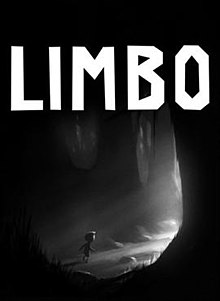
Limbo Rocks!


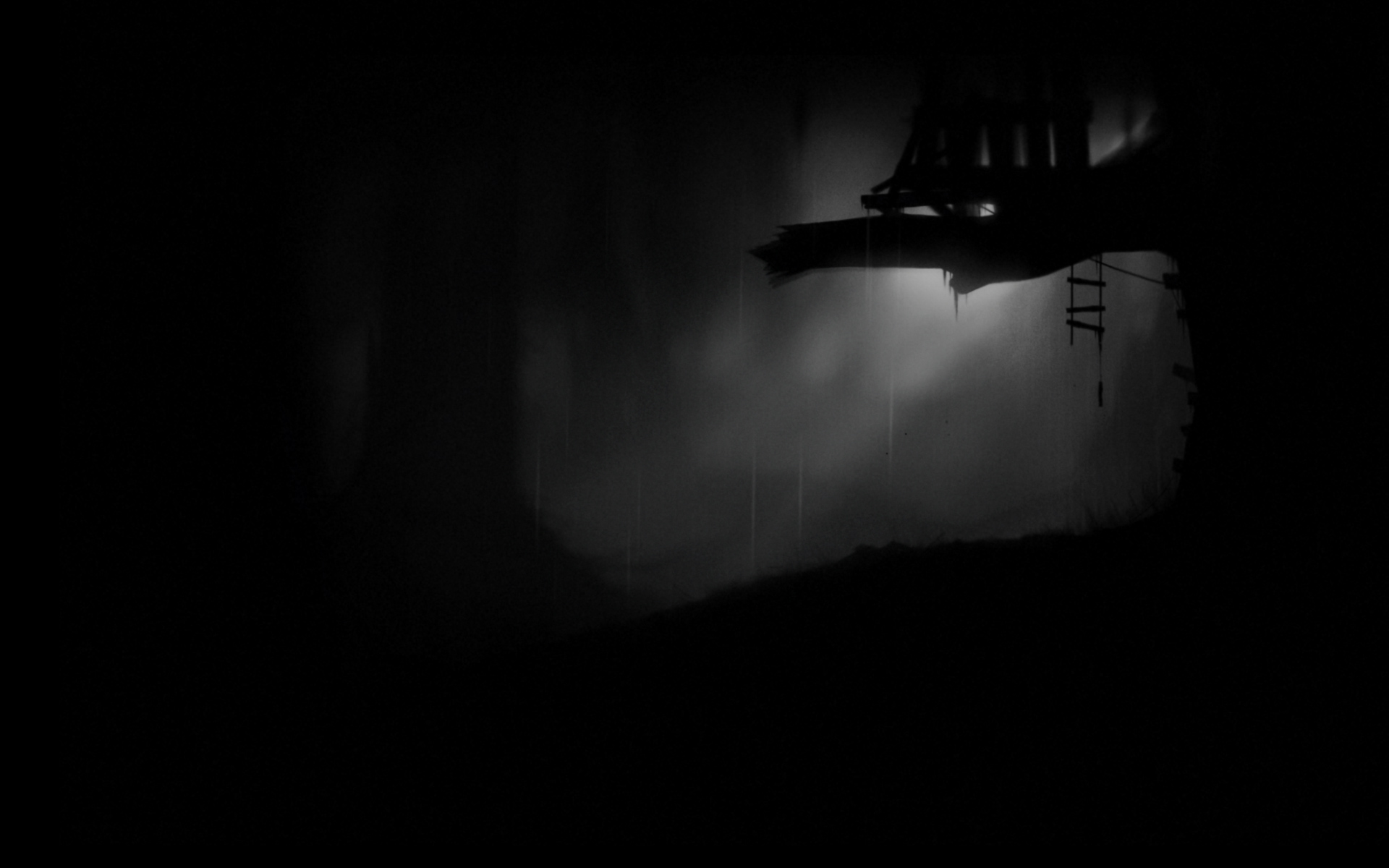
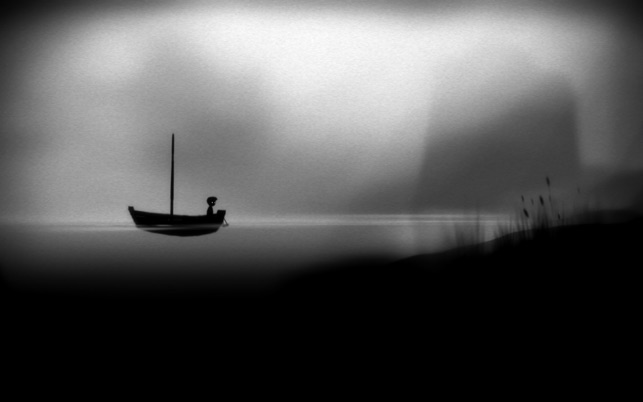
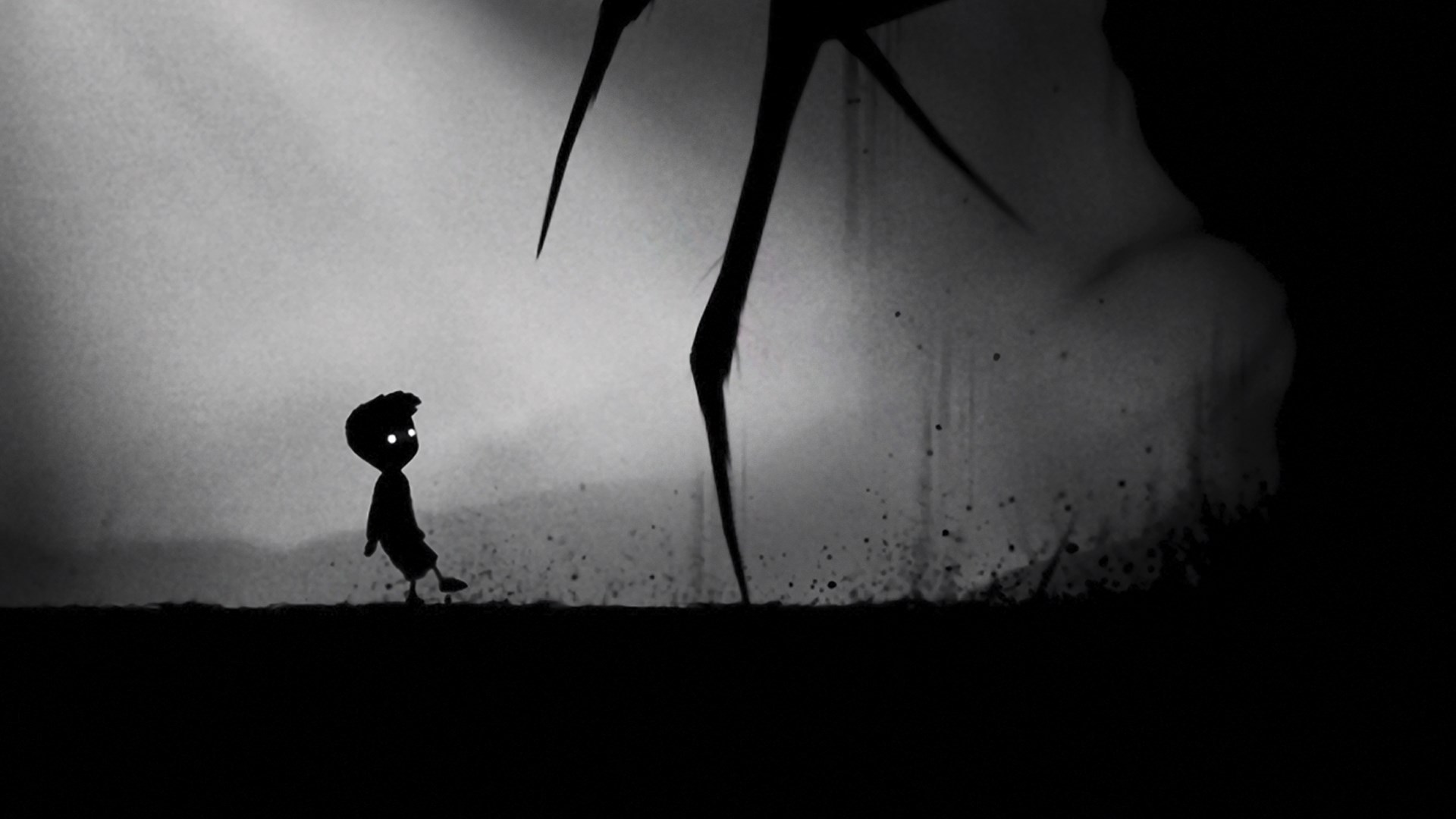
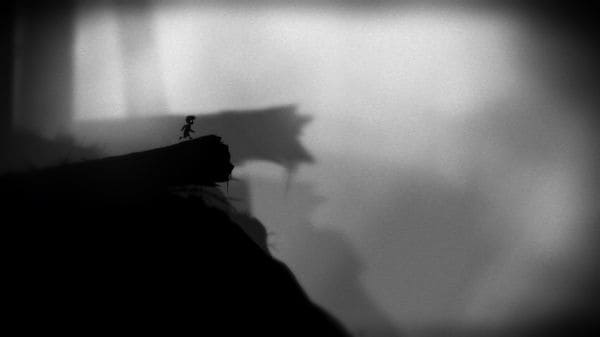
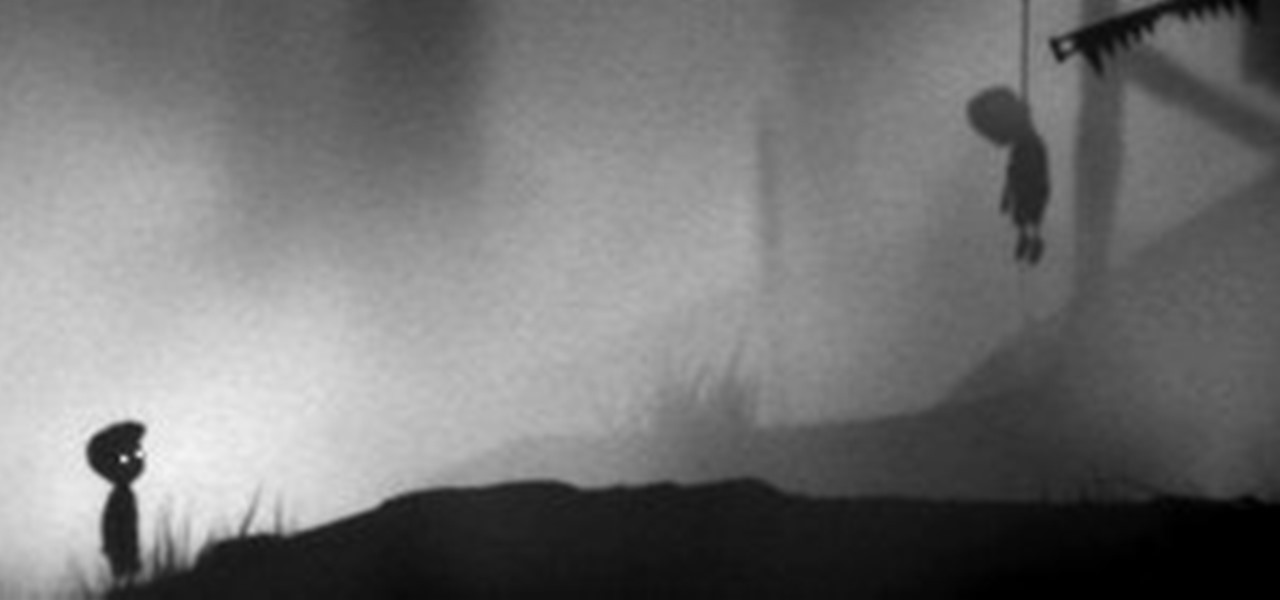
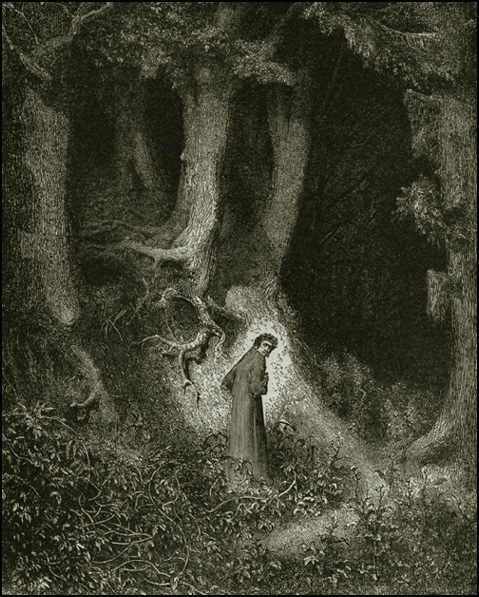
I find myself again thinking about the video game Limbo created by studio Playdead.  The game involves your character, a young boy, wakening in a dark wood alone and then journeying through a dark world in order to find his sister.  Along the way the little boy encounters all sorts of hostile traps, a William Golding-esque tribe of little boys out to kill him (with a worm-infected Piggy drowning in front of him), and a giant Ungoliant-like spider dogging his steps.  Eventually he avoids the traps, tribes and spider and comes to the end of his journey, naked and alone, to meet a female figure (presumably his sister) playing in the dirt beneath a treehouse.  


An excellent analysis of the game is posted by Jake Vander Ende at Aletheia's Herald in which the author recognizes the game as a trope of Dante Alighieri's great work "The Inferno".  Vander Ende notes rightly the strong correlation of the opening of the game with Dante's opening cantos awakening in a dark wood.  Further, the somber and violent nature of the game strengthen the connection between the two works.  Also he notes the river crossings and marshes as similar in setting to the river crossing of Acheron and the marsh areas of upper Hell.  Vander Ende also seems correct in noting the transition midway through the game to a violent mechanized cityscape as similar to the transition into lower Hell through the gates of Dis.  

I very much agree with these connections.  The game seems very intentionally troping all these powerful images from Dante.  I don't entirely agree, though with Vander Ende's comparison of the spider to the beast, Cerberus - despite the "feeding of earth" to both creatures.  Cerberus is a monster of threes (three heads) while the spider is a monster of eights (eight leg).  Moreover, Cerberus is a dog; a very different iconic image than the arachnid image in Limbo.  Also, Cerberus is the first but not the only giant monster encountered in the work; Geryon and Satan himself come to mind.  Finally, though matter is thrown into the maw of Cerberus, the spider is crushed by the rock.  These seem too distinct to reach a good comparison.


The article at Aletheia's Herald also compares the butterfly to Virgil.  Though they have similar characteristics (the guiding nature of each, the connection to the female figures of Beatrice and the sister, and the "living" characteristics of both the Latin poet and the bug) I don't think they can be made an identity.  Further, Virgil in Dante's poem is in Limbo and is called out by Beatrice to reach Dante.  Nevertheless, Virgil remains a permanent resident in Limbo and vanishes at some point during the second of the three Cantiche.  This, I think, excludes the butterfly, a non-human figure symbolizing immortality, from fully embodying the Virgil image.  Moreover, the butterfly is traditionally seen as the image of the soul emerged from its sleep (in the chrysalis) - transformation from being trapped in darkness to resurrection into life.  Therefore it may be a reminder but isn't necessarily a guide.

Finally, Vander Ende writes that during Act III of the game 
"You no longer have angry people defending their territory or whatever, but instead you have pure mechanisms of wanton violence designed to obliterate everything animate and inanimate in their path"
Also, the game's traps become brobdignagian in size suggesting the titanic forces of Dante's giants near the last rings of hell and the giant figure of Satan himself.  Vander Ende writes
"the 9th circle is ringed by giants, just as the end of the game is marked with huge gears that dwarf the main character and are never completely visible on screen because of their size. The gears are essentially automaton giants guarding the final areas of the game..."
Though I think Vander Ende is spot on in seeing the parallels between the two works, and undoubtedly much of Dante is filtered through the designers into the game, I think the key is in the fact that the images are “filtered”.  This process seems to be how great art is made.  Bad art is like a photocopy – it tries to make a direct parallel between itself and some other great work; like putting a piece of literature onto the screen and slavishly repeating every line from the book verbatim.  As Tolkien himself noted this sort of thing is not possible.  A depiction, like a translation, is a form of interpretation.  The images inevitably contribute something new to the meaning, alter the iconography, tell their own story and if the artist refuses to acknowledge this their art inevitably becomes inferior.  If, however, an artist uses the imagery of a great work to tell their own story they are exercising what Bernard Batto speaks of in his work “Slaying the Dragon” as mythopoeic speculation.  Here the little boy slays his own Dragon of sorts, but he does not do so in an identical way to Dante's method of journeying through words back to the light - in fact the game is conscientiously without dialogue.


Consequently, though the developers of the game seem to use many elements from Dante and in fact might base a majority of their story structure and imagery on Inferno, the game seems to be telling a slightly different story.

So what story is it the game is telling?


Some clues to consider: The black and white nature of the game seems to indicate a clash of opposites; duality; matter and spirit, male and female, like the yin and yang of the tao.  The rain and constant water imagery seem to hint at feminine forces in the unconscious dreamworld of sleep or death.  The violent images do seem to increase during the course of the story moving from childish fears of spiders, heights, and traps to malicious fellow humans and finally the impersonal violence enacted on us by in impartial world.  There does seem to be a movement from natural to more mechanical threats as well.

The butterfly has a connection to the soul and the soul’s flight toward perfection.

The youth of the boy and his sister seem to indicate the soul as well since the image of the young maiden/youth, “kore” in Greek, traditionally represents the soul.

The brain worms seem to suggest a perpetuity of the puerile and zombielike activity of youth – the worm being the first of three forms of metamorphosis of the butterfly.


Perhaps, then, one solution to the game is tied into the term “Limbo” itself.  Though the game seems to parallel Dante, it is not a Hell but a perpetual grey day – trapped doing the same thing again and again and returning to the spot you thought you left.  The journey for the boy, then, seems to be to escape Limbo lest it be Hell.  He, like Dante, goes through an interior journey personal to himself into which the nuisances, threats, and fears of the exterior world manifest as lethal dreamlike images.  Broken from his beloved self, the rational, masculine, conscious side (indicated by the glowing eyes) journeys through this world of images, striving to survive, and reunite with its feminine, irrational, contemplative, subconscious side. 

Orpheus seeks his Eurydice, Dante seeks his Beatrice.  In each image the rational is insufficient; deprived of its spiritual feminine element, deprived of love and desire, it falls into a routine, then into a despair, then into a spiritual death.  Days pass into days and all life seems meaningless.  This is the story of the Fisher King, who is wounded in its sexuality, suffering the dolorous stroke, and whose lands fall into parched ruin.  This is the rain, image of the feminine, that falls from the divine realm and heals the land of T.S.Eliot’s “Wasteland”.  This is the transformation by means of rain of the red wheelbarrow of William Carlos Williams.

Our hearts long for wholeness, for home (the treehouse), call it “god” or call it “Beatrice” – for Dante one simply led to the next, ever opening into greater repeated forms.  “You have made us for yourself, O Lord,” wrote Augustine, “and our heart is restless until it rests in you.”  When we no longer see the glory and beauty of life, when we are no longer in love with the world around us, things become dull, lifeless, grey and repetitive.  Shakespeare’s character, Hamlet, experiencing this condition bemoans;


How weary, stale, flat, and unprofitable
Seem to me all the uses of this world!
Fie on't! O fie! 'tis an unweeded garden,
That grows to seed; things rank and gross in nature
Possess it merely. 


At that point of existence we see nothing but cold rain, violence from other people, the random machinations of a hostile world.  The world becomes, as John Paul II said, “a bad night in a bad hotel.”  Limbo.  And in such a state, should we “die”, the world would become Hell.  Even Dante himself recognized this perilous state.  Having suffered defeat at the hands of the Black Guelphs, having been banished from his native Florence and having seen all his political aspirations fallen into the sewer he might have been close to despair.  The Inferno suggests his condition on the brink of suicide through linguistic parallels between his opening cantos and the cantos containing the wood of the suicides.


The trick, then, is to try to get back home; to be born again and see the world as “charged with the grandeur of God.”  Such a return would unite the subconscious with the conscious.  The game’s ending suggests a tree house still intact.  The recognition of the girl to the boy’s presence doesn’t seem to be startlement as much as breathless anticipation.  The last scene is suffused with light.  The boy falls through, not a glass window, but a skein of water – sideways – as though emerging from the birth canal into the world.  Even the comparison of the boy waking up in the first woods compared to the last seems to suggest an ending that reunites the two.  The first woods is lonely and hostile.  The second is peaceful and culminates in the feminine love interest.  The boy travels uphill to meet the girl, symbolizing his journey up toward the light. 

Seen from this perspective I am reminded of St Teresa of Avila’s statement that “In light of heaven, the worst suffering on earth will be seen to be no more serious than one night in an inconvenient hotel.”  The boy and the girl together seem to escape this Limbo hotel, barely passing out of the grinding gears of ever lowering death – just as, in the dance, the bar is lowered - into life. 
(The Limbo) dance is also used as a funeral dance and may be related to the African legba or legua dance."Consistent with certain African beliefs, the dance reflects the whole cycle of life....The dancers move under a pole that is gradually lowered from chest level and they emerge on the other side as their heads clear the pole as in the triumph of life over death".
At the last scene, then, years in the future, the house is in ruins and what seems to be the graves of the children or child lie beneath it.  But the scene is suffused with light.  And since it is the last scene in this Limbo world of perpetual sorrow, the significance seems to be that the children haven’t died but have passed, finally, from death into real life.

I certainly enjoyed reading Vander Ende's article as it sparked again in me an interest in this game.  Now I must go replay it; and play the second of their creations - Inside.


Tuesday, March 12, 2019

Scribble Bibble at Anchor

Don't be cringing and shy!
Come here my new podcast.  Here it is.  
Jump in and learn something.

Scribble Bibble at Anchor

Thursday, January 5, 2017

Abecedarian Prayer


Abecedarian Prayer

All these grand poetic ideas that
Bask in the salt sea of idolatrous
Cacophony; they swell against, they
Deluge the cranium, they wriggle like
Eels in the ear, somehow, I don’t know, they
Find their way there & down through the
Gut to the realms of emotion, sorrow,
Heartache and fear; the Moriadark where
“I”, the essence of man, echoes from the walls
Jocosely gibbering, “what is man?” -
“Kilowatts!”
“Libations!”
“Murmurations!”
Nor in the dark comes immediate answer.
“O, worm!” (evoking the vocative) he prays,
“Pray for us sinners who long for the song to
Quit this mortal sphere.”
Righteousness is but a pithy quip,
Simple for the innocent,
Terrifying for the cave dweller.
Unlike The God we evade rectitude.
“Verily, who is righteous but God alone?”
“What is man that you should grant to him a
Xiphos, keen and bright with which to free
Ygdrassil of all these grand poetic eels,
Zygons of an innocent age?”


Tuesday, January 8, 2013

A cool gif of the Tao


It's coming down.  This time for permanent.  Enjoy this gif.  Sayonara.

Tuesday, February 2, 2010

Scribble Bibble Coming Down

I'm tired of all this and will be taking down any significant posts. Possibly for publication, I don't know, but I'm generally tired of maintaining this blog. After I finish taking down the articles and transferring them to a word processor I'm going to delete this blog.

Tuesday, December 1, 2009

Fagles and the Closed Circle


I was struck this time around teaching Aeschylus of the remarkable nature of this play. Robert Fagles in his illuminative commentary,
"Serpent and the Eagle", claims that the Oresteia stands as one of the two greatest works of the golden age (the second being Phidias' Parthenon). Indeed, when one considers the problem of, as Fagles calls it, the perpetual cycle of human barbarity then the Oresteia offers a solution that is unique in history and pivotal to the development of Western thought.

When I teach the work I always begin by reflecting on the idea that drama originated as a bloodless representation of the bloody sacrifice of a goat or man for the sake of the city. The cathartic experience of seeing another living creature die for the sake of the city's sin, literally of witnessing a "scape goat", cannot be underestimated in the modern world. We all still need this cathartic experience which, as Walker Percy points out, seems to elevate us out of our daily life of complacent normalcy. Thus we still go for thrills at amusement parks, sports, movies, games, anything to jolt us out of the dull greyness of life. For those witnessing this early form of ritual violence the result must have been powerful.

But for the victim it was probably no bed of roses. Thus the myth that the goat sang a song of sorrow before being killed; a goat (tragos) song (oidos) that led to the tragedy (tragoidos) of later civilization. Tragedy became the bloodless representation of the bloody ceremony of death that prompts catharsis. The same jolt could be had through seeing simulated violence instead of seeing real violence and thus a civilization gained the merits of the cathartic experience without the barbarity of bloodshed that disrupts with its inevitable consequences. Mythologically, some god must surely have sent this bloodless substitute. Thus Dionysus, it was said, granted to Athens the Dionysiad; the week-long religious festival of dramatic performance. What began as a single chorus chanting the sorrowful dirges of death (perhaps as accompaniment to the impending sacrifice) evolved at some point to a chorus and a single actor (named Thespis for the sake of argument and thus "thespians"); this evolved again into chorus and several speakers and eventually into several individual characters as we have in modern drama.

The tragoidoi were, however, much more like modern religious ritual than modern entertainment. Just as in the modern Mass of the Catholic Church a single speaker (the priest) would lead a chorus (the congregation) in a series of movements, setting, dress, music, and words all designed to create a mythological world separate from daily experience and reinforcing the idea of a greater or elevated reality to human existence. (As a side soap box, the Church used to have, therefore, beautiful music, robes, incense, lighting, a dress code all in existence to create this separate world. Modern Catholicism abandons all this and so losees the whole sense of drama as ritualized transcendence. But that is another issue).

Aeschylus' plays are not too far removed from the chorus and one or two speakers of earlier drama. His play is still a religious iteration of the reality underlying human existence (like someone writing down the words of the Mass read by later generations). Oresteia, Fagles says, is a dramatic retelling of an eternal human story of death and rebirth; a movement from darkness into light. Yet the play also answers the age old question of what to do with human violence.

The problem with our race is that our default state of thought is tribal; we think first and foremeost in terms of The Tribe. Most of our history is a bloody business of violence and retaliation which emerges primarily from thinking in terms of ourselves as members of a tribe rather than of a polis, or city. Tribe does not mean just primitive societies such as Africa or Indians of Brazil or natives of Borneo, nor is tribe merely a question of sanguinity; "our kin". Rather it is a way of thinking about the world that keeps us primitive and violent

I refer, here, to the analysis of David Pryce-Jones in his study of the Middle East, "The Closed Circle". Pryce-Jones sets out three main criteria that distinguish tribal thought from polity thought. Tribal thinking consists of

1. "our group" greater than "their group"; us vs. them; we are blessed and they are damned
2. honor and the gaining of honor as the driving force of society; all is justified in the acquisition of honor
3. coersion as the main force to influence those w/in the tribe; force or violence

All lead to greater violence, retaliation, and more violence. The constant violence in Palestine, Afghanistan and Africa; the gang wars in Los Angeles and Chicago; the bloodshed in Japan all emerge from this form of thinking. How to break this? Can one break this especially since it goes back to the neolithic era or beyond? The cycle of violence seems perpetual; something ingrained in us from the dawn of rational humans. We specialize in slaughtering one another. Nor is our slaughter ended simply by sending Jimmy Carter to the Middle East.

Aeschylus' play suggests, to the contrary, that the perpetual cycle of human barbarity can be overcome.

Yet it can only be conquered by a radical shift in thought. First recognizing that this bloody cycle is a reality, is perpetual, and emerges from thinking in terms of the tribe. Second, Aeschylus suggests that the cycle can be overcome only by triumphing over "the barbarian latent in ourselves"; the hubristic capacity to commit all manner of horrors. This violence is a form of barbarism antithetical to civilization, yet within every person - everyone is capable of committing horrors. Only by triumphing over the barbarian w/in can we possibly break the cycle of violence. But how is this triumph over ourselves accomplished?

Aeschylus suggests, according to Fagles, that it is done by compassion and lasting self-control. The first, compassion, is loving your neighbor as yourself, seeing the annointed image of God in your neighbor. The second, lasting self-control, is pulling the plank out of our own eyes before taking the splinter out of our neighbor's eye. It must be lasting - like the alcoholic realizing he is an alcoholic must take steps against his disease and refrain, for the rest of his life, from drinking. So too the person wanting to conquer this barbarism must act upon love, realize he has been bought at a great price, and continually control himself from acting contrary to this love.

The serpent of our tribal barbarian, loathsome, close to the earth, inhuman in its reptilian coldness, has to be conquered by the eagle of our political self, immortal, autonomous, angelic. Only this conquering of the serpent in us, this movement out of darkness to light, from earth bound slavery in sin to the freedom of the new dawn, only this is a solution to what otherwise would prove a lasting servitude of horror and blood. This remarkable insight on the part of Aeschylus at the dawn of the Golden Age of Athens, even if it didn't take root in the Athens that was eventually defeated by Sparta at the end of the Polyponnesian war, nevertheless paved the way for the greater and more powerful mythology that was to dominate Europe for over 2000 years, which was to alter the course of Western Civilization from barbaric tribal roots to civilized political cultures, which even now seems the only solution to the problem of perpetual bloodshed and retribution.


There be dragons!