Thursday, January 10, 2008

Ars and Techne

I think this problem is one of semantics. We use the word "art" to mean any old number of things that sort of kind of look a bit like a thing that kind of does a certain thing that is something or another and gets some awards. The classical world, though, distinguished btwn "ars" and "techne", a distinction picked up in the 19th century by Kant and also by R.G. Collingwood (as explained here by Denis Dutton)

Craft is something performed with a known outcome and skill which guarantees that outcome; such as the building of a chair or the putting in of a window. Art, on the other hand, is the expression of human vision or emotion, the outcome of which is not always a guarantee. Art, as Kant said, possesses a certain "genius" or infusion of the spirit which craft does not have. Though art benefits when one knows craft (say how to use paints) knowledge of craft is not necessary for doing art. W/o the infusion of genius, however, craftsmen can do their job quite well. So it seems that art isn't so much a "what does it do" question as a "how is it done" question. If the object produced is one which was achieved knowingly with a guaranteed outcome (as in, this will reroute the sewer) it is craft. If it is produced such that the outcome is not entirely known, yet the work is infused with the indescribable element of genius, it is art.

Do I agree with this?

Yes and no. It seems plausible enough and seems to be extolled by such greats as Kant and even Plato in the Republic; yet I do think that there is a craft to art which can also produce an outcome knowingly. Certain images or forms do certain things, or strike us in a certain way. Colors affect us, images affect us, notes affect us in a fairly consistent manner. Thus the artist, although expressing genius, does so with a knowledge of how his creation will affect others; in other words, he knows what could convey his vision effectively (instead of just trying things until they work). This, of course, is the skilled artist not the hack.

So what is art? To give a criteria by which we say "this is, this isn't" I think is near impossible. Art is the expression of the human soul, the trying to recapture lost paradise, the visions of the beautiful and the damned. How that plays out defies definition. There are some things, though, that work and make us say "yes, that is it" and others that do not work at all and leave us disgusted and flat.

Perhaps, then, the more important question than "what is art?" is "what does art accomplish?" Do artists just produce stuff haphazardly to satisfy themselves in an ars gratia artis way? Do artists produce for cash only? Do artists seek to alter their audience and in what way? These, I think, are more engrossing questions that what the thing is. Ultimately, ars is simply that; literally "a making"; what the Greeks called "poiesis". It is the thing we do that no other animal does. In itself neither a good or evil. But in how it is made and what it seeks to accomplish, therein lies the good or bad art.

BTW, great article on ars and techne by Christopher Janaway entitled "Arts and Crafts in Plato and Collingwood" here at JSTOR if you can access it.

Notes on Nationalism - Essay by George Orwell

A very interesting read on the dangers of nationalism. I esp. like his comments on the maniacal hatred of one's own or another's country that form as a result of nationalism.
Notes on Nationalism - Essay by George Orwell

Tuesday, December 18, 2007

The Serpent, the Eagle, Agamemnon and Aeschylus

While rereading the first play of Aeschylus' great trilogy I came across this statement by Klytemnestra:

You claim the work is mine (the killing of Agamemnon), call me Agamemnon's wife - you are so wrong. Fleshed in the wife of this dead man, the spirit lives within me, our savage ancient spirit of revenge.
(1526-1530)

What a startling admission by the central character that what has been done is the embodiment of our natural human tendency toward violence. We are fallen creatures; and at our heart we are dark and savage. We must, as Robert Fagles points out in the essay "The Serpent and the Eagle" strive for a "...victory... over the barbarian latent in (ourselves), the hubris that unites the invader and the native tyrant as a targets of the gods." This is only possible through "...compassion and lasting self-control" in the pagan world. There is no hope of redemption accept through the wearisome toil of self-control and rational thought which allows us to think through how we are to govern ourselves. Without such thought, without such toil we fall into that cycle of feuding bloodlust that drives even today one clan, one gang, one family to seek the annihilation of the other. Only through law, adherence to self control, and constant exercise of compassion and charity can we hope for a better world.

Klytemnestra, notably enough, is also devoid of any individuality. The revenge murder which she has plotted these 11 years, to which her entire intellect has been turned, has stripped her of individual will and the ability to see reason (or ratio); she is no longer an individual in the LOGOS but an archetype acting as the agent for that "savage ancient spirit of revenge." So do all people who resort to violence over compassion, anger over understanding, dictatorialism over democracy, lose their individual importance and become just another face in the yelling mob of faces. Only goodness is unique; evil is ordinary.

But more, still, for the toil and labor of our own sweat and blood to hold ourselves to the honorable course of self-control and compassion is an impossibility in the long run. You injure mine and I will crush you - "annihilation" as Medea says. In the pagan realm one can marvel at the unique glory achieved through self-control and compassion as a principle, but we fall short, we fail of achieving this glory ourselves and so we end up as victims and losers. Pagan thought offers no solution to this failure. The barbarian latent in ourselves cannot be mastered through our own efforts and so we continue to be pursued by those dark cthonic gods we call "Eumenides".

Christianity alone offers any solution to this conundrum for (as Nietzsche pejoratively declared) Christianity is a religion of losers.
Failures.
The weak, the broken, the sorrowful and the crushed.
Christianity is all about not being strong enough to endure the grinding Grendelian churning of the wheel of human nature; we cannot master ourselves, and yet that's okay. In Christ is our hope and our salvation. We die that he might live and all our glory, says St. Paul, is due to him. The failures crucified on either side of the Divine Failure are given hope that their sanctity is ensured, not because of their own broken muscle and sinew, but because they recognize their smallness and weakness and give over their broken and contrite heart to the Lord.

Then
in the midst of that sorrow and failure
a miracle!
for Jesus Christ is born this day
and Lo! he makes all things new.

Wednesday, December 12, 2007

An Exchange

This was a recent exchange with a student:

Hi Mr. A,

I was just procrastinating (my last final is a take-home due tomorrow morning), and I was reading through your Tolkien quotes via your blog. I happened to notice the one I was expecting to find wasn't there. I'm sure you've read it before and perhaps didn't think it fit among the quotes about LOTR and his other works... So on the off-chance you actually haven't stumbled upon it, I thought I'd share it with you. And if you have, I figure it's always great to read some beautiful thoughts on the Eucharist. It comes from a letter he wrote to his son, I believe:

Out of the darkness of my life, so much frustrated, I put before you the one great thing to love on earth: the Blessed Sacrament ... There you will find romance, glory, honour, fidelity, and the true way of all your loves on earth, and more than that: Death: by the divine paradox, that which ends life, and demands the surrender of all, and yet by the taste (or foretaste) of which alone can what you seek in your earthly relationships (love, faithfulness, joy) be maintained, or take on that complexion of reality, of eternal endurance, which every man's heart desires.

Sincerely,
A Studentia

Dear Studentia. How excellent to hear from you. Do stop by and witness all the wonderful produce of my teeming brain and all the gripes fit to share with grads.

About the Tolkien quotation: I don't recall if or why that quotation was excluded, possibly the author of the blog was unfamiliar with the corpus of JRRT's work (including his letters). For my part, that quotation has always had a place with the other great words about the Eucharist. Tolkien, unlike Lewis, had a phenomenal vision about what the world was and how love should relate to it; perhaps born of his suffering at the Somme, perhaps simply a byproduct of his remarkable literary intellect. One of the most striking things about the quotation is that it is in the context of a letter to his son about girls and relationships. How, then, did Tolkien view the conjugal relationship, romance, marriage, and the Eucharist as interconnected? I certainly think he did. The Eucharist is “…the one great thing to love on earth…” but not the wafer; rather “the Blessed Sacrament.” So what does that mean? What is the sacramental vision of life? Is it that, as Hopkins said, “the world is charged with the grandeur of God” or as Aquinas pointed out the world and everything in it is good? Test all things and retain what is good, said the Medievals. Sacramental vision means that one sees the order, structure, and goodness of the world even amidst the “horror and frustration” the filth and disappointment; amidst pedaphiliac priests and indifferent congregations – even in the midst of the mire of man’s sweatiness, there too is the Christian divinity “... There you will find romance, glory, honour, fidelity, and the true way of all your loves on earth…” The focus must remain on the Eucharist and one clings tenaciously to that vision that man is inherently good, the world is inherently good, despite every sorrow that speaks contrary to this. Moreover, one is not simply Pollyannish in this vision, for the vision is one that also finds “Death: by the divine paradox, that which ends life, and demands the surrender of all.” We find beauty, joy, sorrow, pleasure, love, terror, success and failure, all drawn toward the person of Christ and thus made comprehensible.

There was a time when I ceased to believe in the Divine Presence… that we consume a wafer of bread? That we venerate a wafer of bread? To do a double kneel to the wafer of bread in a monstrance? How preposterous, silly, infantile. Such thoughts still plague me on bad days, but here’s the deal; the wafer of bread, like all created things, has a connection to the divine realm --- it has become the representative of all things as charged with the divine presence of the LOGOS, the order. Thus it isn’t the bread I venerate, it is the LOGOS, of which the bread is but a conduit or representative. “Why bread and not cheese?” asks the skeptic. But that’s the point. As all created things are connected to the divine, each thing has in its construct a reason and purpose, a symbolic quality; trees are trees and eggs is eggs. Why? Why is an egg eggie? Why is a tree “treeish”? And what is it about bread in that shape with that quality that separates it from a loaf or a shoe or a dog? Why is man man? If the LOGOS has a purpose it’s purpose is learned by looking at the creations and asking such questions as “what makes the red man red?” Bread and not cheese is the perfect representation for a something which the LOGOS wants to make manifest and it’s my job to figure out what that thing is; in fact, it’s my salvation and eternal lifelong task to figure out what that thing is. Sure, there are questions in the back of the head which gnaw at belief and threaten to overthrow all religious sentiment, but the real questions are not “why ought I to believe this crap?” but rather, “how does my belief and the understanding of that belief strengthen who I am? What must I do? Why is a dog not a god?” The threat of these questions is like looking into death; confronting a dragon, or that evil force that wants us to despair and fail (like the Nazgul lord at the gates of Minas Tirith or Sauron in his dark tower probing Amon Hen). But I must allow that peering into death question if I am to also be open to the honest questions which make a man a man. As Tolkien put it “…and yet by the taste (or foretaste) of which alone can what you seek in your earthly relationships (love, faithfulness, joy) be maintained, or take on that complexion of reality, of eternal endurance, which every man's heart desires." All is beauty, all is gift, all is love, and that sustains me (and, I hope, contributes a bit to my salvation).

Thanks for the letter.

Stop by anytime.

AbecedariusRex

Monday, December 10, 2007

Macbeth the Damned


To-morrow, and to-morrow, and to-morrow,
Creeps in this petty pace from day to day,
To the last syllable of recorded time;
Macbeth Act 5, scene 5, 19–28

Note here the repetitive use of the word "tomorow"; thrice is a charm and just as the three weird sisters speak their charms in three, so too does Macbeth speak his own damnation thrice. He thus confirms the damnation as an inevitable reality. The repetition borders on tedious monotony (one more and he'd seem daft) and thus conveys the hopelessness that the next day will be different from the present and the insanity that drives one to see each day as identically devoid of hope. Further, the cadence of the line is thus daDUMdum, ba daDUMdum, ba daDUMdum; or in poetic terms it is a series of iambic + anapestic + anapestic, sort of. In actuality the line follows no set rhythmic form of poetry (breaking Shakespeare's normal use of iambic pentameter) but is itself a series of stressed and unstressed syllable which act like waves crashing into the reader. Macbeth has "so far waded into blood that it would be as tedious to turn back as it would be to go o'er." He is a man drowning in his own damned fatalism. So his vision of the morrow consists of one day after another hitting like breakers against the drowning swimmer.

Additionally, the days seem to "creep on by" for him. They do not run or jump or gallop, they do not gambol or lunge or lurch. Creeping is a slow, monotonous action that again bespeaks the perpetuity of damnation which the future now seems to hold for him. But creeping also has two other connotations; first, animals on the prowl creep toward their prey. In this first sense, the future is like a carnivore stalking Macbeth, waiting to devour him. He endures a sense of impending doom from the future as though he will eventually be found out and the great crime he has committed will be revealed. Second, though, is that creep is normally associated with weird or uncanny things (as in "that's creepy"). For Macbeth the future has become something fraught with terror of the unknown and stalked by horrors and creatures from the other world. He sees ghosts and moving forests. His future has become nothing but a long Creepshow.

Also note, the creeping is done in a "petty pace." Indeed, pettiness means something small, mean, and unbecoming of noble men. To be petty is to be pusillanimous, small souled. It carries with it the connotation of claustrophobia and being trapped in one's own self. But why not "petty track"? or "petty gait"? or "petty cadence"? Shakespeare seems to have chosen the alliteration of the "p" sound for some intentional purpose. For one thing, the formation of the p sound involves a puffing of the lips, an action done to express frustration or juvenile disdain. For all its horrors and pain, the future may seem to Macbeth to be a frustrating series of base or ignoble trials to be endured without purpose and without cessation. For another thing, the puffing out of the lips involves an exhaling of breath, as though the final exhaling of breath, death, is the inevitable end of all this wearisome toil.

The petty pace ultimately leads "to the last syllable of recorded time." How is time involved with syllables? Why does Shakespeare use here a word, "syllable", associated with poetry and story to delineate time? And who is doing the recording? "Recorded time" is either backward looking or forward looking; that is, either time is being recorded after events happen and thus is retrospective, or it is already recorded and men are merely fated players on the stage. The syllables that compose the story of our lives are written either by a benevolent god who creates story in tandem with his creatures (thus allowing our free will to remain operative) or they are written by dark and severe god who has set down the story in stone from which no created being may deviate. The latter possibility seems to confirm the fatalism of Macbeth and suggests that he sees the future with nothing but horror for when the last syllable is spoken the tomb will be shut and Macbeth's life will be thoroughly and completely damned.

Aquinas and the nature of science.

Check this out.

http://www.medaille.com/thoroughly%20modern%20thomas.pdf

I was struck today by the distinction btwn physics and bio. 11th and 10th graders hate both b/c they see only the drudgery of the discipline but I, being free of the work part of it, was interested to note that they are the same study, that is, “why is there stuff and how does it work?” If it is the guts of a frog, why do the guts have the order they do and why should they be at all? If it is the movement of physical objects, why ought they to exist, or move in this way, or move at all? These would be powerful questions for Thomas, I’m sure, b/c he was asking the greater question "Who is God?"

Why, for instance, do we have bodies unless they are meant for a purpose? If they are not for a purpose, then isn’t all creation useless and what sort of god would make a useless construct? Or if the “prize” is only in the next life and this world is to be abnegated, then what sort of god would create a useless construct with the intent that our glory be further on, after the destruction and burning of this world? Cruel god? Capricious god? Vindictive god? Then isn’t god the same as Zeus or Baphomet or Ahura?

IF we believe in a god who is good, rational, merciful, then aren’t we bound to consider what the structure/purpose of this world really is? Seems to me that’s exactly Aquinas’ point. He works in the Summa from the premise that God is one, good, merciful to the premise that the world and all in it is worth study. We are not only allowed to study the LOGOS in order to be one with God, we have an obligation to do the same to the best of our ability, b/c only that which is known can be loved.

Thursday, December 6, 2007

Looking into the Abyss


I found an interesting passage in Euripides' "Women of Troy" yesterday where Hecabe laments how she now sees "...the cold abyss of truth" (Vellacott). This abyss seems to parallel the abyss from whence emerge Erebos and Night as mentioned in Hesiod's Theognis. It also is a striking parallel to the abyss over which moves the ruha of YHWH at the beginning of Genesis. It is the same abyss described by Goethe and Kierkegaard and Melville and John Paul II. What is most striking is that, given the syntax of Hecabe's realisation, truth comes from that abyss just as creation comes from the abyss of the waters. Is Euripides (like the other great writers) suggesting that our existence hovers over an abyss? That at the heart of things there is a darkness? Or is he suggesting that the experience of the abyss is necessary for wisdom (a la Job)? Or is the suggestion that the abyss separating man from the truth of God, separating Augustine from belief, separating Gatsby from Daisy, is so vast that we can't always see clearly that there even is another side to which we might strive. Thence comes sorrow, grief and despair.
I'm reminded, though of two cultural references; Apocalypse Now "Never get off the freakin' boat" - don't abandon the craft when you lose sight of the farther shore. Gattaca "I never left anything for the return journey" - striving for that ever receding Ausonian shore with every ounce of our being and not saving anything for getting back to normality. Is that what Hecabe is experiencing? And does that mean that true wisdom ONLY comes after draining dry the cup of suffering?

Friday, November 16, 2007

Ahab says to Starbuck, "All visible objects, man, are but as pasteboard masks. But in each event ... some unknown but still reasoning thing puts forth the mouldings of its features from behind the unreasoning mask. If man will strike, strike through the mask! How can the prisoner reach outside except by thrusting through the wall? To me, the white whale is that wall, shoved near to me.... I see in him outrageous strength, with an inscrutable malice sinewing it. The inscrutable thing is chiefly what I hate."

Ahab twists into something unholy and terrifying the vision that all things are metaphor for something else. Yet in Moby Dick the vision is already twisted and terrifying; the god is an unreasoning whale, the sea is dark and protean, the crew is savage and brutal. The world is already a nightmare such that Ahab's vision is but a nightmare within the nightmare. The book itself is therefore a pasteboard mask, hiding through Melville's obscure language and copiously unnecessary minutia of whaling lore some dark vision of how things might be. If indeed everything is a metaphor for everything else, Melville intimates, how then can we ever know what is the really real? Aren't we just pushed about by dark forces that don't kill us outright but rather maim us and leave us to live on with only one lung? Dark shadows with condor wings, to borrow from Poe. It is a dark vision, indeed, and not easily softened by the platitudinous responses of Melville's more religiously-minded critics. St. John of the Cross offers this sort of reflection, to descend into the darkness w/o the hope of return as a thing necessary if we are to grow. Yet even the suggestion that this endurance of the darkness, the horse doldrums of uncertainty, might be for our betterment and growth is to delete the experience of its effectiveness. Maybe there is no betterment. Maybe things just happen. And your ship gets staved in by the malignant force with a hump like a white hill leaving you clutching for dear life to Queequeg's coffin, held liminally between the infinite depths of the sky and the infinite depths of the abyss.

Tuesday, November 13, 2007

On Plato

A recent exchange with a student on Plato.

Hi Mr. Rex!

I hope everything is going well for you!

I just had a quick question that I thought you might be able to help me out with. In 611c of

the Republic and in the surrounding area, Socrates is speaking of how factious things made

up of parts ultimately corrupt and only unities and harmonies are eternal. If this is the case,

then in 611c when he mentions justice and injustice he uses the plural- implying that justice

is factious. If this is the case, doesn't this imply that Platonic thought viewed justice as

conventional and volatile? This seems to contradict the entire message of the Republic, but

as it comes at the end and it seems very deliberately placed, I can't quite pass it off. Can you

make anything of it?

N.O.

Dear N.O.,

Thanks for the email. You caught me on an exhausting afternoon with an open house looming before my eyes so I wasn't able to answer toot sweet.

About the Republic 611c line. I hadn't given it much thought actually. In all likelihood, there is little chance that a single word would throw into confusion the entire bulk of the text. Still, it is not beyond Plato's ironic dexterity with language to do exactly that; to say, "well, in the end, maybe it's all balderdash." What is Socrates really talking about, after all? It is only nominally Justice, just as it is only nominally about philosophy or a city. The city works to talk about justice which serves to talk about the examined life which serves to talk about ... what? A vision Plato had? An ineffable beauty within but not of the world? In which case, all metaphors break down. The city metaphor only goes so far before it gives way to the cave metaphor which only goes so far before giving way to Er and so on. If the term of Justice has served its purpose, Socrates/Plato no longer wants us to dwell on it; this is god and not god - or, "look pilgrim and then pass on" as Virgil says to Dante. All metaphors, even the words and concepts of abstract thought, move us toward a deeply silent and personal contemplation of what really IS; being qua being. Thus, if Plato were to throw into confusion the definition of justice he so carefully has crafted to this point I would not be surprised. Is his message, then, that of the Eleusinian mysteries that we ought not to cling too readily to any one thing? All things change? All things are mutable? The only constant in life is change. Why should we be surprised by fortune's inconstancy, advises Boethius, when change is her nature? Plato wants us to be able to say, this is Justice, yet more to the point he wants his readers to find humility and thus wisdom (philoSOPHIA, after all). Such humility only comes by accepting that we are not gods and change happens; a good bumper sticker, or phylactery, or mantra. The trick isn't so much to claim that we know what these shadows are b/c we see them more often than others, nor to gain prizes b/c we actually are better at naming them, but b/c we accept that we are not gods to see them and pass out of the cave into the light. This is justice, but justice even is not the point. I know what justice is, but it isn't "my justice" nor do I claim divinity b/c I know what justice is; rather divinity is granted me b/c I know that I do not know.

I'll look further into this when I have breathing room. For now, have to help a student with an essay then go down to play practice.

Gnothi seauton.

A. Rex


Friday, November 2, 2007

Analysis of the Evidence

Photographers of any worth are very intentional about how they compose their photographs. Each picture is supposed to say 1,000 words, to whit photographers are meticulous about lighting, color, pose, background, setting, props, focus, film type and numerous other details that consumers like you and I take for granted.
Take for instance The Esquire photo of Bill Clinton a few years back:

Exhibit A

Bill Clinton, erstwhile commander in chief and darling of the liberal media.
There he sits, the picture of masculine power and confidence, the smug smirk on his face, well groomed hair, soft blue lighting, the halo in the background; note the size of the hands - controlling, powerful, rugged; note also the lay of the tie - powerful, yet casual, not prim at all; note the position of the hands akin to the Lincoln statue in the memorial; note the pose - legs spread in that dominant male stance to show off the groin; note the angle of the photograph which takes the role of an intern begging for direction; note also the black stool which we all know is a stool that blends with the black suit such that, though we know it's a stool, it takes on other ramifications of innuendo and subliminal impact (boy is Mr. Clinton endowed, isn't he? Don't you want to be an intern? Don't you want to worship before his might? The photographers is intentionally creating an image to inspire adulation before the golden boy of the left.

Compare such an image to

Exhibit B

Ann Coulter; conservative hothead and no-nonsense commentator on liberal policy.
Long legs exaggerated, the lighting again like a halo, but somewhat disturbing (no pleasant blue background here); the chair an oversize leather bit of painful pop art; note the clothing, the dark dress, white tights, black shoes like some nun or Puritanical mistress of all that oppresses freedom; note the pose as though ready to leap from the chair and go for your throat - no smile - no twinkle in the eye- severe, angry, unflattering; note the hands (one of the most attractive things in a woman) hidden from view; note the angle of the camera with its prurient upskirt view like some crazy private school Abby Hoffman waiting to take advantage of this conservative schoolgirl prude. Not the same photographer, true, but the photo of Ann could have been different. It could, after have been like this...


Exhibit C

Current Junior Senator and President Elect Hillary Rodham Clinton, the great white hope of the liberal left.
The colors; warm red, powerful, inviting, communist, but also redstate. The couch, some Edwardian beauty taken from somewhere in the White House, reminescent of those couches royalty used to employ when visiting hours at Buckingham palace occurred; the great, regal frame of some important potentate hangs overhead; the camera, slightly above shoulder level, looks down from a standing position, as though the photographer were at the Christmas party hosted by the CEO and you round the corner carrying your glass of egg nog with the best rum in it, and there, sitting demurely in a Victorian decorated room is Hillary, a smile on her handsome face and her hair in a perfect Martha Stewart, sitting side-saddle facing you directly; her dress is a dark, velvet number like Grace Kelly might wear or Princess Diana or some other regal-seeming individual with a gorgeous foreign accent; one hand lies pleasantly on her lap, the other pats the couch, as she purrs, "I'm not a threat. I'm a beautiful woman ready for Christmas. Come, sit next to me, tell me how you want to see the country fixed."

Wednesday, October 10, 2007

Incomprehensible and therefore Funny


I found this on a website about the Koran:

Gerd Puin, the world’s leading specialist in Arabic calligraphy and Qur’anic paleography, studying the oldest manuscripts, speaks with disdain about the willingness of Muslims and non-Muslims alike, to accept Islamic dogma. He says: “The Qur’an claims for itself that it is ‘mubeen,’ or clear, but if you just look at it, you will see that every fifth sentence or so simply doesn’t make sense. Many Muslims will tell you otherwise, but the fact is that a fifth of the Qur’an is just incomprehensible. This is what has caused the traditional anxiety regarding translation. If the Qur’an is not comprehensible, if it can’t even be understood in Arabic, then it’s not translatable into any language."

It figures.

Friday, October 5, 2007

On Mercantilism


Mercantilism was the theory that gathering the limited supply of wealth in the world is vital to the survival of a nation; thus mercantilists insisted on very strict government control of trade and commerce. Well, if that's the case then the Stamp Act, Tea Tax, and all other impositions by the British government on trade in the Colonies make sense. The same taxes et alia were imposed in Britain to almost 3 times the amount they were in the colonies, yet Britain didn't revolt. Why not? B/c the colonists had discovered how wealthy they could become if the government left them the hell alone. So our entire Revolution owes a big tip of the hat to the laissez-faire economics that runs in opposition to mercantilism.


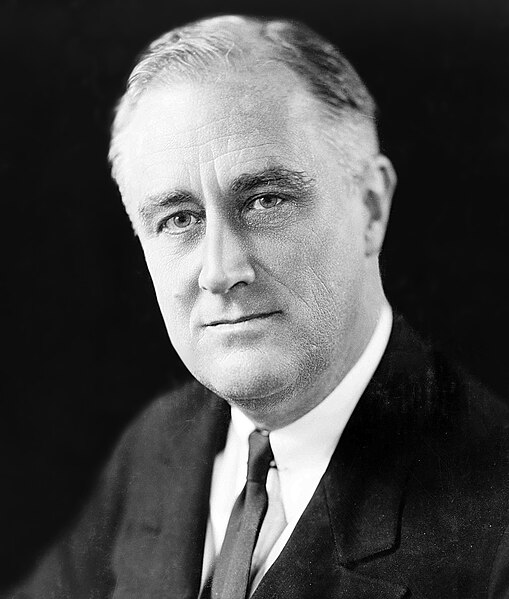
Moreover, in our century (20th) FDR tried the same trick as King George; the New Deal laid a heavy series of taxes and controls on big commerce and trade and consolidated American votes in Washington with the excuse that they were "looking out for the little guy." They weren't. It was mercantilism under another form. And the damage that FDR did to the economy and the government didn't even begin to be undone until Reaganomics in the 1980s.

Monday, September 24, 2007

In praise of garbage

I ought to write a book (I ought to write several books) and title it "In Praise of Garbage". Reflecting on the Federalist papers leads me to believe that our national penchant for just mindless junk is actually a very fine thing. Oh, don't get me wrong, I still think that filling the heads of the young with a lot of mindless garbage can be a bad thing if that's all there is. I still have valuable RAM taken up with the words of Oingo Boingo songs, Oscar Meyer weiner ditties, baseball stats of the Chi White Sox in 1980s and trivia about Star Wars. But Hamilton claims in Federalist 10 that one of the ways to remove the deadly threat of factions is to make the populace share similar values. He dismisses this as impossible since people by nature are different and will choose different things. But what if something has occurred that Hamilton could not foresee? In our time, the last 100 years we have seen the development of the automobile and road system allowing people to travel far and spread out in a mass Exodus throughout the nation; we have seen the rise of movies, TV, and radio, and now internet and video games allowing people across the nation to share the same entertainments; we have seen the rise of professional sports allowing people throughout the nation to have similar loves of divergent activity; we have seen the mass market of foodstuffs, toys, clothing, and gear allowing people to collect cheaply a vast array of similar junk; we have seen the rise of the shopping mall, the waterpark, the drivein movie theater and all the other pasttimes that people enjoy in their leisure time; we have seen the evolution of the five day work week, the summer vacation, and the watercooler allowing people to make a good living and gripe about it to boot; we have seen the proliferation of various foodstuffs of all ethnic and bland variety (KFC and Bucca di Beppo in the same block) allowing people to eat good food from various backgrounds.

Much of this might be dismissed as the work of the devil which only serves to corrupt our sensibilities, make us hedonistic bread heads, and lead us into a callous Americanistic boorishness not shared by our more elite neighbors on the other side of the swimming pool. True, true, true.

But think of it... where else on earth do people from so vast a geographical distance get together to share a love of Hummells? where else on earth do thousands of screaming fans go to watch the Twinkies beat the tar out of the White Sox and then go home amicably? where else on earth can people on either East or Left coast talk jovially about the latest episode of Survivor? Garbage brings us together.

I know, there's alot more that brings us together, but no one seems to give credit to this amazing American phenomenon of the production of garbage. No other country does it on so vast a scale. No other country seems to share so various and so similar tastes. And no other country enjoys the relative peace and amity that America enjoys. Even when we hate the opposition we don't actually go out and flay them.

In the Middle East to solve a problem means open carnage in the streets, murder, mayhem, yelling, screaming and riots. But then, the Middle East has never had a professional sports league like the Giants. Is there a connection? I think that indeed there is and if/when I write my book I will give a big hats off to whomever first said, "that'd sell to the American people."

Wednesday, September 5, 2007

Alexander Wilder and the Greek Gods

This excerpt from Alexander Wilder struck me as quite significant:

The worship of these subordinate beings constituted the idolatry charged upon the ancients, an imputation not deserved by the philosophers who recognized but one Supreme Being, and professed to understand the hyponia or under-meaning, by which angels, demons and heroes were to be regarded. Epicuras said, "The gods exist, but they are not what the [[hoi polloi]], or common multitude, supposed them to be. He is not an infidel or atheist who denies the existence of the gods whom the multitude worship, but he is such who fastens on these gods the opinions of the multitude."

Aristotle declares: "The divine essence pervades the whole world of nature; what are styled the gods are only the first principles. The myths and stories were devised to make the religious systems intelligible and attractive to the people, who otherwise would not give them any regard or veneration." Thus the stories of Jupiter, the siege of Troy, the wanderings of Ulysses, the adventures of Hercules, were but tales and fables, which had a deep under-meaning. "All men yearn after the gods," says Homer. All the old worships indicate the existence of a single theosophy anterior to them. "The key that is to open one must open all; otherwise it cannot be the right key."

~Alexander Wilder


What Aristotle seems to touch on is a fundamental reality of human existence; we perceive metaphysical realities first and foremost through artwork, images, forms. Philosophy and theology express metaphysical truth and make it intelligible, but myths and stories make metaphysical truth intelligible and attractive. Thus we find ourselves "relating" to a song or movie or story, though not to the doctrine of three persons in one god. The "gods", then, are these powers or manifestations of the One God that occur in our world and through us. We still today make heroes of our celebrities. Emulating them and admiring their enviable success, we tacitly wish that we too could be famous and svelt and successful. We still conjure the pagan gods as well each time we covet the luxuries of the shopping mall, or make a deity of alcohol and drugs, or over-romanticize sexual love through porn or adultery. The pagan gods and heroes are still very much with us b/c they are part of a fundamental longing in the human heart. By worshiping them we run the risk of becoming again their slaves and making them, as Augustine said, into demons. But by studying them and pondering what they really embodied, we not only come to understand the unique greatness of Christianity, we also come to know the metaphysical world and ourselves as well.

Monday, August 20, 2007

Beowulf the hero

I read with interest Douglas Wilson’s article on Beowulf in Touchstone magazine. I was surprised, however, that Mr. Wilson did not mention the concept of Ragnarok in regards to the epic poem. Surely the pagan Norse were not unique in their experience of internecine war, treachery, and hopelessness; one has to look only to the strife-ridden court of Constantinople to prove this. But the Norse were unique in their concept of Ragnarok as an inevitable end of everything that exists (gods included). As J.R.R. Tolkien has pointed out in his masterful article “The Monsters and the Critics” the heroic strength to face despair and grapple manfully with it rather than backing down is the greatest contribution that Anglo-Saxon literature has given to Western culture. This concept must have permeated the world view of the Anglo-Saxon poet and influenced the nature of his work.
When the Anglo-Saxons sharing this world view of inevitable ruin were converted to Christianity they must have seen in the person of Christ a savior who fit this view of heroism. Such an interpretation is born out by two examples, namely “The Dream of the Rood” which refers to Christ’s victory over death in terms of bravery in battle and entrance into the Lord’s mead hall.

That Son was victory-fast in that great venture,
with might and good-speed when he with many,
vast host of souls, came to God's kingdom,
One-Wielder Almighty: bliss to the angels
and all the saints--those who in heaven
dwelt long in glory--when their Wielder came,
Almighty God, where his homeland was.

Se sunu wæs sigorfæst on þam siðfate,
mihtig ond spedig, þa he mid manigeo com,
gasta weorode, on godes rice,
anwealda ælmihtig, englum to blisse
ond eallum ðam halgum þam þe on heofonum ær
wunedon on wuldre, þa heora wealdend cwom,
ælmihtig god, þær his eðel wæs.

The second example is a vignette concerning the conversion of King Edwin in “Bede’s Ecclesiastical History”, Bk II, Ch XIII. After the priest, Coifi, gives a speech supporting Christianity and calling for conversion, one unnamed theign casts his lot in favor of conversion and uses the famous image of a sparrow flying through a mead hall, saying,

"The present life of man, O king, seems to me, in comparison of that time which is unknown to us, like to the swift flight of a sparrow through the room wherein you sit at supper in winter, with your commanders and ministers, and a good fire in the midst, whilst the storms of rain and snow prevail abroad; the sparrow, I say, flying in at one door, and immediately out at another, whilst he is within, is safe from the wintry storm; but after a short space of fair weather, he immediately vanishes out of your sight, into the dark winter from which he had emerged. So this life of man appears for a short space, but of what went before, or what is to follow, we are utterly ignorant. If, therefore, this new doctrine contains something more certain, it seems justly to deserve to be followed."

The darkness surrounding the mead hall, with all its uncertainty and menace, is a parallel to Ragnarok, in the face of which every man is made weak. Beowulf proposes that facing this darkness is what makes a man heroic. Rather than crying out for something radically different than paganism it seems that the poet is actually encouraging his audience to embrace an image of heroism also exhibited in the heroism of Christ. As such, it tells a much more universal and human story.

Tuesday, August 14, 2007

Demons


And just in case you thought those stories about demons were a bunch of hooey....

Monday, August 13, 2007

On Eros


A recent exchange with a graduate.


Dear Abecedarius,

Far be it from me to convert to paganism, but the Greeks' insight is starting to make it sound attractive.

Greeks had (as far as I know) two versions of the deityEros:


  1. Eros was not only erotic love and beauty but also the personification of the creative force, one of the primordial gods.


  2. The other version has Eros the god of romantic love, son of Aphrodite and Ares, and being a chaotic, mischievous force.

To some degree, Greek Polytheism seems to be the attempt to reconcile the unity of goodness and its many, often conflicting, manifestations. Zeus is a powerful god who in a sense stands for unity and goodness, but when the question is asked "From where comes evil?" we get comical images of the apathetic Zeus sleeping around. It's almost as if the Greeks knew goodness was one and was powerful, and that there was evil, and having no way to reconcile these two ideas, they made a farce of it by manifesting different goods in different gods so that they could conflict.

This is where the two versions of Eros come in. In the first sense, erotic infatuations are the most providential of human affairs, originating in being qua being himself more directly than any other passion; in the other sense, erotic infatuations are some divine anomaly (as many objectivist biologists like to think today) that are the result of a rebellious, chaotic and mischievous force, thus making erotic infatuations outside of divine providence. Both ideas seem to be common today, and both seem problematic.

On one end, an idol is made of Eros, and the items of worship range from modern innundation of Harlequin novels, to various television shows, to unhealthy obsessions that control lives, particularily high school girls. Eros is trusted as if he were God Himself, and current infatuations are taken to be THE infatuation. When Eros breaks one's trust, one can only experience the most nihilistic heartbreak.

On the other end, Eros is killed in the name of stoicism. There can be no romance, but mere sexual drive. Eros becomes a passion to overcome. In the Platonic sense, Eros is an appetitive passion, and the virtuous man controls and exercises temperance with regards to his romantic appetite. The problem with this scenario is that Eros seemingly cannot be controlled; it is by nature chaotic. One cannot chose whom one falls in love with, but can only choose whether to trust providence and pursue the beloved, or to trust his own wits, betray Eros, and pick a more suitable spouse outside Eros's counsel.

I suppose my entire email boils down to one question: Can one fall in love with the wrong person, and what are the ramifications of this?

Sincerely,

Alfred P. Student


~~~~~~~~~


Al,
You just jumped right in there, dintcha?

First, we have to consider that no idea, including ideas about the divine, ever occurs in a vacuum. We have to look at the historical progression of ideas to get a sense of what we are dealing with in the modern world.

Yes, the ancients did see the force of Eros as positive and negative; but they saw all divine forces as such. Man was a pawn in the plan of the gods, subject to the whimsy that changed on a drachma. So Eros was both the beautiful force of attraction to the good, and it was the destructive force that played gin rummy on human lives. What were they talking about? Most probably they were describing that force that drives us to love this or that thing/person beyond our control. For the ancients, to disobey such a force caused ruin and, since life was short, one took what pleasure one could when one could. Carpe diem, said the Latins. Not everyone did this of course (Hector) but all reckoned that this was a force to have to deal with. Euripides’ “Bacchae” is really dealing with just this force of wild abandon and desire; ecstasy. I really believe that the ancients did see these forces as stemming from a central force or being, but they didn’t talk that way. Probably b/c humans must dissect in order to understand anything, so we break the power down to its constituent parts. Even Zeus himself was not the final force or power; he was merely the ruling Olympian god; law and order imposed on others (all of his sexual escapades are actually impositions of law, not eros gone willy nilly; they are rapes, not consensual powwows). This concept of various divisions of one force goes back to Neolithic (Stonehenge and Egyptians) times. Such gods were very real in that they really were thought to walk the earth but they bespoke of a dark and violent force to the world. Originally depicted as snakes, they later morph into animals and protean elemental forces. I don’t think that such a sense of terrifying snakiness has ever left us. We are still, as humans, quite pagan in our outlook on life. (so you can’t convert, you already are!) But history has added nuance to our paganism.

The first nuance was the change during Homer & later Plato’s time. Homer first starts to speak of the gods in a critical way. Not so much to poke holes in the whole polytheistic thing (I don’t think he was thinking that far ahead) but to show that these forces lent themselves to humor and tragedy. He was a radical in his era, but he also made a living by embodying the zeitgeist of the Ionian age. This same criticism is later picked up by the Athenians who see the gods not as gods external to us but as representations of forces within man. For Plato, the gods were a language for talking about those things we experience as humans. Nevertheless, the golden era philosophers seem to have believed that there really was a force of some sort to which man conformed (both physically and spiritually). This force is difficult to speak of directly so we speak of it through a mirror, or shield, which is polytheism. We anthropomorphize in order to understand. But in anthropomorphism a major change takes place. The snakiness disappears. No longer are the gods forces that control us, but they begin to become forces which we participate in (since they are manlike and not “Kadosh: otherness” as the Jews called them). Suddenly the gods become incarnate in man form and are thought to be understood not as beings that walked about the earth, but as forces which we control. No longer is Eros a destructive, whimsical force giving pleasure here or there, but becomes an expression of that longing which every man feels within him for some unknown beauty; the unknown Areopagite god. This unknown god is so beautiful that a man must control himself in order to see him, and sacrifice all else that he has for this richness. So a shift in teleology occurs; nuance is added to our pagan thought.

The next additional nuance comes from the merging of Jewish and Greek ideas. The Jews, who initially also saw the forces as serpents stemming from one serpent, began to conceive of the force as anthropomorphic; Yahweh was a man with hands, feet, breath, eyes, even a backside (which he shows to Moses). Moreover, he was a manlike being who loved his little creatures, instead of merely using them. This is a significant change. If the forces are within us, then the fact that the force loves us gives a teleology to the forces within us which is radically different than previous. This is why I love the mythology and religion of the Jews. God loved us, not only in a sexual way (as the Greek gods did) but in a deeply moving type of love that was beyond even eros. Eros becomes caught up in a greater love of self and other which is what Yahweh displays to his little shepherd idiots. We begin to get an insight through the Jewish faith into a being who loves on many levels; and thus we get an insight into the fact that our loves (whatever those mysterious movements in the soul are) have a greater telos than mere gain or pleasure. The Jews stressed family life as the greatest institution on earth. Man and woman were made to get married (not just to exchange bodily fluids) and within marriage sexual love was the highest expression of love (witness the book of Tobit wherein the demon seeks to block, not the marriage, but the sexual consummation of marriage). Thus for the Jews, women were honored above all else and the having of children was “arrows within your quiver.” Wealth became measured by how much one loved one’s god, one’s family and, by extension, one’s neighbors.

When the Jewish beliefs merged with the golden era Greek philosophy a new concept came into existence which again gave nuance to our paganism. The nuance was a merging of the Jewish concept of love & marriage (esp. as a symbol of God’s love) with the Greek idea of longing and self-control for a greater good. “No greater love hath a man than that he lay down his life for a friend.” In Christ we have the union of the concept of marriage and sex and birth with the concept of self-sacrifice, denial, suffering, resurrection. The Jewish aspect proclaims that “God so loved the world” and that Christ attended the wedding feast at Cana, and that “out of his side flowed blood and water.” The Greek aspect proclaims that “…he gave his only begotten son” and that Christ “suffered and died so that we might have life” and that on the third day he rose from the dead. The belief for men shifts in this nuance from being merely a concept to being an embodied individual; there really was a Christ, he really did bless marriage and friendship, he really did suffer and die and rise again. Thus our belief in the Incarnation changes our concept of ourselves. Not that if he could do it so can we (because that implies that success is merely a force of will) but rather that the focus of the divine force within us is to endure suffering and failure for the sake of the love of others not yet seen. Marriage and sex become a “total gift of self” (to borrow the words of JP2) and even Eros is subordinated to understanding, nobility & honor, and self sacrifice for the good of something greater. That’s one heck of a nuance.

The final nuance, IMO, is that given to the West by the Medievals. The code of chivalry exalts women to the status of quasi-divine creatures. I don’t think this is a new exaltation; I think that men have always had a tendency to do this. But the Medievals gave voice to what this experience is like and in the romances suggested that such a natural exaltation is symbolic of man’s longing for something greater than himself. The knights, ladies, monsters, love affairs, duels, and quests that populate the Medieval romances are themselves a landscape of the human heart wherein man learns how best to focus his own natural desires. Sure we can sympathize with another man on a cross, but my own desire for a woman, esp. one made unattainable by marriage to another, eats at me and conflicts with that image of self-sacrifice embodied by the figure of Christ. How can I be a good Christian when I so desire her? How can my natural drive to procreate with this divine-like being be reconciled with the purity and chastity which Christianity urges me to cultivate? This is the big question of the romances the answer to which gives the final nuance to our paganism. Lancelot’s desire for Guinevere never fades. In fact his perpetual desire for her destroys everything that he has ever believed in; ruins his wife, strips him of all honor, wrecks the court of Camelot, takes the life of Arthur, prevents Lancelot from achieving the Grail, and reduces him to a starving heap of a man. Yet he does not stop loving her. If she is the image of longing which Eros produces that does not bode well for any of us. When does Eros let us go? The answer, I think, is never. But what Lancelot does is remarkable. He chooses to apply himself to an honorable course of life. He chooses to enter the monastery when Guinevere enters the convent. He chooses to do penance for the love that has brought so many to ruin. This choice is the answer to those big questions of desire; we choose honor even if it makes us suffer and die. By doing so, we are not driven about by Eros but have a choice to remain constant to a way of life we know to be right. In so doing we become the greatest of chivalric persons.

Taken altogether, I don’t know if I answered your question. Bluntly, can you fall in love with the wrong person? Sure. Are you driven by love to have to act on that love? Absolutely not. Our “falling in love” comes and goes; Eros still shoots arrows. And in our blackest moments we all of us are pagans. But what the history of thought has shown us is that those black moments do not have to last. Ultimately, our sexual desire and, moreover, the desire of our heart (b/c the two are not entirely separable) will always be for different people. But we are free to choose that person who is right for us (I mean by “right” honorable, financially secure, emotionally stable, supportive of us, and attractive), commit to them, and remain faithful despite the tidal changes of the heart.

Eros is a force, like all the pagan gods, which, if worshipped like a god becomes a demon. He does not command us, we command him. And in the name of honor, self-sacrifice, goodness and happiness, in the name of Jesus Christ, we order him down to his proper place.

Hope this all helps.

Friday, August 10, 2007

Monday, July 23, 2007

Tristan & Isolde

The lovely AbecedariusRegina and I watched the new version of "Tristan & Isolde" a few nights ago.
This new version is directed by Kevin Reynolds stars James Franco and Sophia Myles. Most of the critics hated the movie, but I'm afraid that in years of reading the Arthurian stories (Mabinogion, Gawain, Yvain, Cretien de Troyes and Malory and Pyle, et alia) and in years of looking for even one good adaptation of the Arthurian cycle, my standards have grown pretty low. First there was "Camelot" in which the Rogers & Hammerstein music made the whole thing rather silly. Then there was "Excalibur" where the blood, sex, and general Heavy Metaldom ruined the movie. Then there was "First Knight" in which the aging Sean Connery could not save the film from the acting of Richard Gere and the plot and direction of Jerry Zucker which produced a state of unbridled hilarity followed by dull disoriented nausea.

In brief there has never been a really good version of Arthur. There has never been a good version of Arthur. Hell, there's never been an even passible version of Arthur. All are bloody, oversexed, silly, ignoble, or downright laughable; Hollywood actors with perfect teeth flouncing about in poorly constructed armor delivering horrendous bits of ill-constructed English in bad British accents.

Thus it was that I came to the movie expecting little and found Tristan & Isolde somewhat above the crop. Yes the teeth are too perfect and the accents too bad and the costuming the usual dun colored pseudoprimitive garbage we saw in Antoine Fuqua's Fuquaed-up piece of shlock (whose sole redemption was watching Keira Knightly in tight fitting leather!). Nevertheless, though James Franco did little more than brood and bash heads, and though Sophia Myles was a bit on the breathless and whiny side, the movie nevertheless did some justice to this ancient story.

Let's not compare the movie to Tristan und Isolde by Wagner or to Howard Pyle's brilliant retelling of the story or even to the original tale of Beroul b/c the movie certainly does cut so big a wake as those excellent giants. Nevertheless, the plot does move, there are exciting moments and there is some good dialogue.

There were good lines such as

King Mark's address to the other chieftains, "Will you always be little men incapable of seeing what once was and may be again?"

or Tristan's last words to Isolde, "I don't know if life is greater than death. But love was more than either."

or Isolde's attempt to dissuade Tristan saying, "We both know this cannot be, Tristan. We knew it from the start. That doesn't mean it wasn't true, it is."

or her realization of the pain of adulterous love, "Yesterday at the market, I saw a couple holding hands... and I realized we'll never do that. Never anything like it. No picnics or unguarded smiles. No rings. Just... stolen moments that leave too quickly."

or Tristan's response to Isolde's praise of love, "There are other things to live for; duty, honor."

or Mark's pitiful confidence with Tristan, "Is it possible a man blinded by love might not see treachery right in front of him?"

The acting wasn't so atrocious that it burned the eyeballs to watch it. In fact, I thought that Rufus Sewell did a particularly good job in making Mark a likeable, rather pathetic, but ultimately noble man. Sophia Myles made good eye candy and did a passable job as a sweet, somewhat love stricken princess. Even James Franco was at least the brooding, if somewhat unbelievable, image of Tristan.

The story differs from the traditional Tristan & Isolde, adding political intrigue with a bloodthirsty (though not monstrous) king of Ireland, attacks on castles, raids on slavers, and Tristan's visit to Ireland prior to when he visits in the stories. Traditionally, Tristan visits Ireland as emissary for King Mark to win the hand of Isolde. During his stay on the emerald isle he becomes friends with her, and eventually falls in love with her. Some versions, including Wagner, attribute the love to a potion given Isolde by her witch mother for the sake of enticing Mark but which the two inadvertently drink, thus making their passion utterly beyond their control. They refrain from physical consummation of their desire, yet eventually, after the jealousy of Mark and the potential ruin of the court, they do have an interlude. It is a gripping and moving tale exploring the conflicts in man of jealousy, desire & reason, duty vs. love, honor vs. ruin.

The movie has Tristan loving Isolde physically before he ever returns to Cornwall (since Hollywood can't depict true love without making the beast with two backs). In this movie version, the irony is that Tristan wins Isolde in a contest of arms hosted by the duplicitous King of Ireland who seeks to drive a wedge between the chiefs of the English Isles (discount all history here, btw). It's an interesting twist on the tale and actually does work to produce an element of tragic tension. Tristan does refrain for some time (in movie time, of course) from engaging in adultery with Isolde and the movie does lean toward the fact that it is adultery. One does not desire harm to come to Mark and actually sympathizes with the poor one-handed cuckold. Further, the movie explores some of the damage which adultery, even adultery based on honest feelings of love, exacts on other people. Everyone around the adulterous couple notes their flirtation, except the benighted husband. Some try to warn them (Isolde's maid, Tristan's adopted brother) and some use the information to ruin Cornwall (Mark Strong in a great loathsome baddie role). But eventually all are affected.

There is an element of nobility in Tristan and Isolde, the former realizing the damage done by his careless passion and seeking to clear his name pushes Isolde away in a boat and gives his life to defend the keep. There is a hopeful ending to the movie with Cornwall surviving the onslaught of the Irish and the Irish king going down in a great oh shitter battle. And there is redemption for Mark who allows the two lovers to escape his prison and grants Tristan absolution at the end of his life.

The story would have been stronger had we seen the ruin of Cornwall due to this affair, and the cheesy epithet to the movie was completely useless. Perhaps the weakest point of the movie was the lack of thesis; was it about adulterous love? was it about the good power of love? was it about the treachery of jealousy? was it about honor superceding the temporary feeling of love? was it an attempt to tell "the real, historical story" of Tristan and Isolde (an attempt upon which many directors foolishly embark, nota bene Fuqua's upped effort)? Any single concentration on one of these theses would have benefitted the movie.

Yet overall, it was a good tale and good use of the material and is, so far, the best telling of an Arthurian tale to emerge from the Hollywood fleshpots.

Harry Potter

I had a good conversation with Mrs. S last night at our UD alumni blowout about Harry Potter. My feelings are somewhat mixed on the whole series; I admire J.K.Rowling for having "made it" in the literary world and for giving kids something, anything, to read BUT (there's always a big but) I don't much like the series nor do I clap my hands with more vigor for the HP series than I would for Donald Duck comic books (in fact some Donald Duck comics are better than Harry Potter). Kids are reading and enjoying the reading. Great! But that's akin to saying, kids are talking and enjoying the talking. The important matter isn't that they are reading/talking, but rather what they are reading/talking about. I like this article at National Review by Carol Iannone concerning Harry Potter. This line especially sums up the conundrum: because something sells and is popular doesn't mean it's good.
Verbum sapientibus

Tuesday, June 19, 2007

Michael Davis on Plato Nietzsche and Death

Just read an excellent article by Michael Davis in his collection of essays "Wonderlust" published by St. Augustine's Press. The essay entitled "Plato and Nietszche on Death", like most of the essays in the collection, has several penetrating insights. Davis recalls Nietzsche's critique of Platonic thought saying "For Nietzsche the West is in some sense the Christian West, and 'Christianity is Platonism for the people.'" Indeed, the Christian Church burgeons with Platonic imagery so much so that most people (who do not know Plato) hardly notice the influence, taking for granted their own heritage and thinking that Christianity somehow sprang, fully formed from the brow of Judaism.

But, Nietzsche's critique of both Christianity and Platonism is pejorative.

About the sage Nietzsche's Zarathustra has this to say:

His wisdom is: to wake in order to sleep well. And verily if life had no sense, and I had to choose nonsense, then I too would choose this the most sensible form of nonsense.

The contest between Plato and Nietzsche is, according to Nietzsche, a contest between the view that really makes sense of life and "the most sensible form of nonsense," that is, between truth and the most seductive form of error.

Nietzsche held that any such form of mythic illusion was no more than a lie which we tell ourselves in order to not have to face the harsh reality that there is nothing beyond this world. Plato gives false hope to his interlocutors by suggesting that The Good is the Intelligible and the Intelligible is beyond this world. "Nietzsche seems to say that this identification of the good with the intelligible is an example of Platonic cowardice," Davis points out. As a colleague of mine suggested, perhaps it is Nietzsche who is the coward. There is no mathematical proof that the things of religion are true; there is no absolute assurance beyond doubt that when we die we don't just cease to be; crikey, there is no certainty that the person of Christ was really a person. But it seems to take more courage to operate in this world, putting one foot before the next, without that mathematical certainty. To progress in doing good in the midst of a brutal, cruel, merciless world, never knowing if one is really doing the good or if there will be reward or if one is affecting any change at all (or if there is any transcendent being observing our actions) seems to be a much more courageous course of action than saying there is no good beyond this world and consequently doing nothing. It certainly is more consistent than one who says there is good and doesn't do it, and more logical than one who says there is no good but does good anyway. So perhaps the real coward is Nietzsche, even if he is an ubercoward.


More striking in the article are Davis' observations on exactly what Plato was doing in his dialogues. Assuming that Nietzsche was right in his critique and that Plato "does not regard the separate existence and particular immortality of souls even as conditionally true"; assuming that he was crafting a "noble lie", what sort of "lie" is it? (or to make the question more piquant, "what sort of lie is Christianity, being based on Platonic thought?") One of the things that Davis notes is that Plato himself is not present at the death of Socrates; in the Phaedo he is home, sick. Sickness being a little death, Plato is fighting to stay alive. Socrates, by contrast, is eager to die. Davis points out that this detail has great significance for the author of the dialogue himself seems to be advocating life in contrast to death. Yet if we take the characters in the dialogues not at face value (always a good practice for dealing with Plato) but as metaphors for something greater, what then is being portrayed?

Davis suggests that, first, the death scene is an intentional parallel to the Minotaur story of antiquity. In the older story Theseus
...saved fourteen Athenian youths and maidens from the dreaded Minotaur. ...Phaedo gives an enumeration of those present at Socrates' death, and we discover that fourteen youths are present. Like Theseus, Socrates will save these youths from a dreaded monster.
The monster from which Socrates saves his Athenian youths is the dreaded fear of death; not just the cessation of life, but something more. The minotaur is that half man/half bull which breathes ice and devours flesh in the dark; something terrible and cold and inhuman in that maze of the afterlife which devours the mind with despair. As Davis points out, "human beings live better lives when they are not continually haunted by the knowledge of the necessity of their own deaths." Thus the story functions on the level of myth that gives hope to both interlocutors and future generations of readers.

But, Davis suggests, there is still more to the dialogues. Indeed, Socrates is philosophy in the dialogues. As such, the implication is that philosophy seeks death. How could this be? Socrates does himself say that philosopy is a "preparation for death", but a seeking of death? Davis notes that philosophy is the pursuit of the absolute universal; the Good; good, beautiful, true in their universal, pure form. One falls in love with the Good and wants to be one with it.

But to do this a strange thing has to happen; one must lose oneself. Mollusks do not know they are mollusks, but men know that they are men. They register pain & suffering, have doubts & fears, hopes, loves, artistic insights, shame & pride. In short, men have a sense of their individuality, their "selfness". But the individuality of the self gets in the way of philosophy and as such must be rendered inert; abnegated; killed. The self must be put aside if one is going to experience the ecstasy of joining with the One. How, indeed, can the many be united to the One? Wouldn't they have to become the One in some sense? Thus the self must die if it is to live in union with the Good. In this way, Davis says, philosophy is self-destructive.


Before we have some mass Cathar suicide ritual going on here, though, we have to recall that Plato himself is not present at the death; he is alive and trying to stay that way (to paraphrase Jack Gilford). So Plato is not suggesting that physical death ought to be pursued. Rather, the fear of death addresses "what Cebes calls 'the child in us who has such fears'". Davis notes that,
The mortal fear of death naturally gives rise to a longing for immortality as its cure. This longing is not a desire to be different from what we are; it is rather a desire to remain eternally what we already are. It is an attachment to ourselves.
Everyone, from the slacker to the schoolgirl, from the professor to the pundit, abhors change and wants to be in control of the situation they know. No one wants to endure the suffering which death, in a most radical way, imposes. Thus we delude ourselves, surround ourselves with goodies, abuse each other, lord power over one another, and generally act like spoiled children. Such attachment to ourselves the Greeks called hubris, to which could be attributed every rotten excess of human crime and folly. In the Christian sense, pride (hubris) is the root of all sin (separation from God). Hubris is, essentially, an ingratitude for the goodness which we do not deserve. Thus, we have to grow up. Davis suggests that

Only knowledge of our own immortality can destroy the fears of that child in us and, in a rather radical way, force it to grow up.
Those who refuse to grow up avoid facing their own immortality and seek to maximize pleasure. Yet such eternal pleasure is not really possible; "...the complete absence of pain would be possible only given the complete absence of pleasure," as Davis notes, "the natural desire to maximize pleasure, if pushed to its extreme, is a sort of death wish." Yet the same holds true for anyone who longs for an afterlife of eternal pleasure. Since pleasure and pain are yoked together in the individual self, to eradicate one or the other would also eradicate a self to register them. Davis suggests that

...common sense takes as its standard the soul, or life, as it is, and then attempts to imagine what would be the most satisfactory form of such a life. The result is an ideal life, which because it takes its bearings by the extreme... cannot be lived. The ideal verson of life is incompatible with life; it turns out to be a kind of death. This is the tragedy of common sense.
Human life is, at root, tragic because we all long for something which would spell the end of us; we long for our own annihilation; oblivion;
a draught of vintage! that hath been
Cool'd a long age in the deep-delvèd earth

But as Keats noted, to long for such a thing spells our own forlorn doom. "While it is the case," Davis notes, "that the tragedy does not exist for a mollusk, it is also the case that a mollusk does not know that it is a mollusk. The human self seems to be constituted by the conflict between its desire to be what it is and its desire to be other than what it is." So at the very heart of philosophy, represented in Plato by Socrates, is an "awareness of the tragedy of common sense." If we indeed struggle under this crucifying tension of tragedy, why? from whence does it come? what is consciousness that it causes us to weep? and what is man that Thou dost care for him? mortal man that Thou dost love him?

For this reason it is of some importance that the whole question of immortality does not enter Socrates' argument as a means to overcome death. It enters as a means to overcome ignorance.
Man must know who he is; gnothi seauton, as the Greeks urged, if he is ever to grow up. Otherwise we stumble about striking, mocking, spitting at, and crucifying one another. But knowing who we are is hindered by the hubristic self-interest that every person bears with them. Self-concern "gets in the way of our pursuit of wisdom... to see the world as it is and not through the lens of our self-interest requires neutralizing self-interest." And to see with such clarity makes one a better person.


So religion (and the "noble lie" of religion) is not such a lie after all but a perspective shift. Davis concludes,

By asserting the existence of a better life after death (even without absolute mathematical assurance of such existence - my own interpolation here) this life is made better. That is, by providing a vantage point from which to judge the goodness of life, the character of this life can be known more fully.

Monday, June 18, 2007

About the Desire for Power

And now at last it comes. You will give me the Ring freely! In place of the Dark Lord you will set up a Queen. And I shall not be dark, but beautiful and terrible as the Morning and the Night! Fair as the Sea and the Sun and the Snow upon the Mountain! Dreadful as the Storm and the Lightning! Stronger than the foundations of the earth. All shall love me and despair!
~Galadriel

Tuesday, June 5, 2007

The Harmony of Apollo

To prove I'm not the only nut in the forest, here is Steve Bass with "Listening for the Harmonies of Apollo" published in American Arts Quarterly, Volume 18, number 2.

There be dragons!